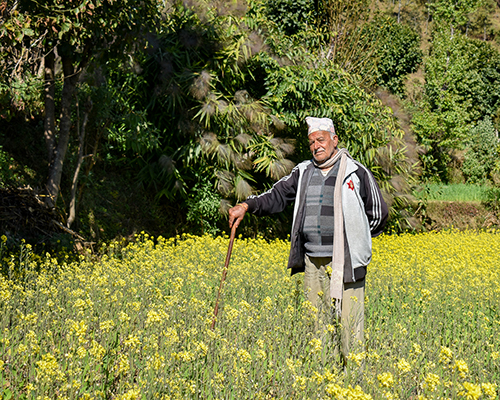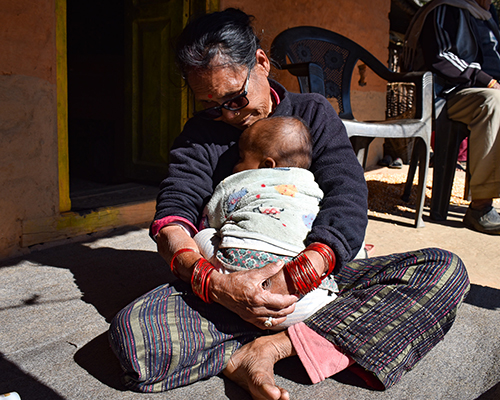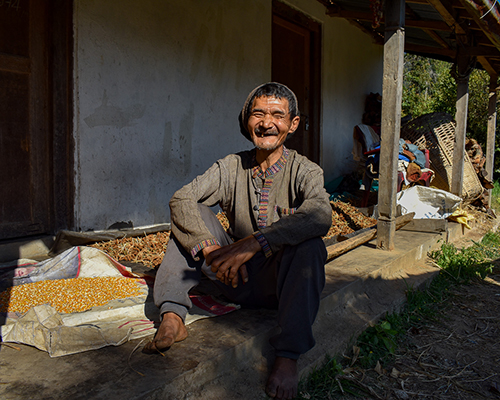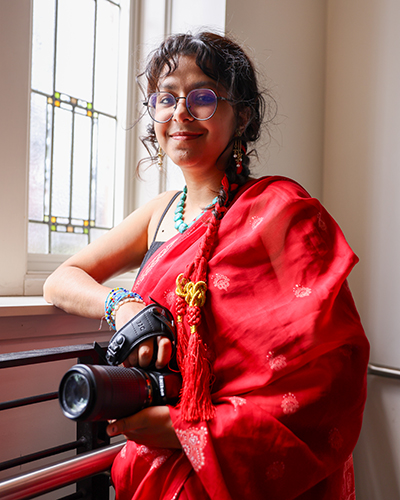
Smriti JS Neupane ’26 traveled across 11 time zones in her final semester at Cornell to spend 20 days in her home country of Nepal, completing work for her individualized major in digital communications and multimedia. At most other schools, she wouldn’t have had a block to get away without impacting other courses.
With One Course At A Time, she spent time discovering her hometown in a new way, making connections with the people, and learning about herself as an artist and a person, all while working with a mentor back on the Hilltop: Associate Professor of Studio Art Alex McKenzie.
The new Cornell alum, who goes by the artist name Jhyass, reflected on the experience:
“I came to Thokarpa, my birthplace, for my capstone project. It has become so close to my heart that I don’t even call this a ‘project’ because it transcended my plan, and my ‘aim’ was not an aim anymore. If I had approached it with an aim and treated it as a project, I would have limited what it could yield. It was important to me because many lives like theirs are rarely named or remembered in formal archives, even though they carry deep knowledge, care, and history.
By preserving names, relationships, and daily rhythms, the archive would ensure that people are remembered as individuals within a living community, not as anonymous images or symbols of hardship of rural life as often depicted in urban areas, or as the symbols of hardship and misery of ‘third world countries’ as often understood in the Western world and the mainstream media. I walked to approximately 50 houses across four hills, some days with my buba (grandpa) and some with Rojan, my neighbor/friend/little brother, and some days by myself. I talked to people I knew and did not know, listened to their daily lives, and shared mine. I don’t know if they had enough for themselves, but each house I went to gave me food—milk, oranges, tea, rice. They truly expanded my heart and my idea of humanity. I pictured them just as they were, talking, laughing, working, and eating, and let them choose their pictures.”
Neupane’s priority was to compose work with the people and not just about them. She took dozens of photos, hung them up, and created an open-air gallery. Each photo tells a story.