
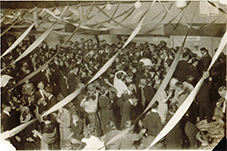
Dec. 4, 1926, marked the night of the annual Sans Souci carnival. It was colder than normal, with an extra bite to the air as the students walked down the hill to the gymnasium. The muffled clink of change in pockets, the whisper of skirts, and the sharp click of dress shoes on pavement echoed through the evening.
The Cornellian had quoted a “prominent junior” as declaring that his classmates had completed “plans for the staging of the greatest Sans Souci in the history of Cornell.” A program of student vaudeville, stunt, and choreographed acts was lined up for entertainment. They promised a “night of never to be forgotten revelry.”
As the students entered the gym, a nervous energy thickened the air. Streamers swooped across the ceiling, while balloons, confetti, and hot dog sellers lined the edges of the gym. This was going to be a night for the history books. The students had gathered. They had debated and weighed their options. They had made a decision.
Tonight they were going to dance.
One hundred years ago students at Cornell College did something simple and radical: they danced. Only for a few songs. Only after years of petitions and debates. But in that brief moment, they crossed a line the institution had held for decades—and claimed a voice that would shape campus life for years to come.
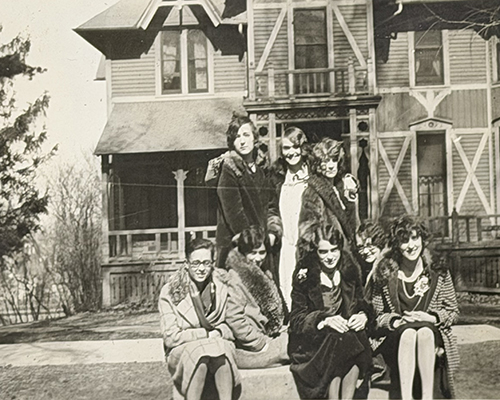
The moment was fleeting; however, the struggle behind it was anything but. Long before students took the floor, the college’s Methodist heritage had drawn a firm line around what counted as acceptable fun.
Since its opening in 1853, the college has welcomed men and women. The foundation of co-ed socialization in those early days was Rule 12, which was printed in the student handbook until 1869—but referenced and enforced for many years after. This rule stated, “The escorting of young ladies by young gentlemen is not allowed.” How it was applied varied, but at one point included being at least six feet apart when walking home together. For nearly 70 years, Cornell students had lived under these rules shaped by the college’s founders.
The Sans Souci Carnival was the answer to this dilemma. “Sans souci” means “without worry” in French, and having a carnival theme brought that atmosphere to campus on an annual basis. Put on by the junior class, it involved performances by students and booths to buy food and trinkets. Some years the entertainment even included traveling acts.
“Around 1910 the students started to want to dance a little bit more. Post World War I, the soldiers had come back from Europe with ideas and dances. Music was changing, morals were changing, and the way that people dressed was changing,” said Consulting Librarian for Social Sciences, History, and Special Collections
Meghan Yamanishi. “By the 1920s it was a big deal. It was a time of change in the country and at Cornell.”
The resulting debate was labeled the “social problem” and included students, faculty and staff, the Board of Trustees, and President Harlan Updegraff. On one side, there were concerns about upholding traditional values in students’ social life. On the other side was a drive to give students more say in their college experience.
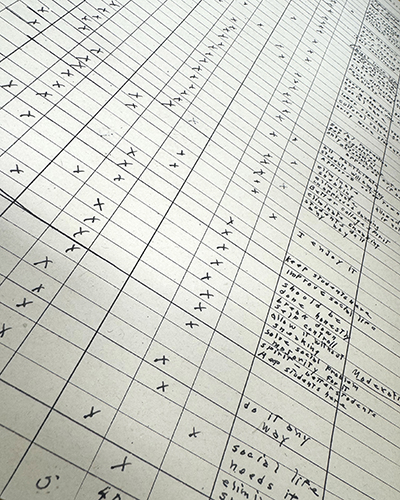
In the years leading up to the night in question, students had signed petitions, asked the faculty for support, and gone to the Board of Trustees to ask for the social rules to be revised. In 1924 the student body filled out surveys to share their opinions about allowing social dancing on campus.
Reasons given in the 100-year-old handwritten surveys preserved in Cornell’s archives showed that students who supported dancing cited benefits such as “better college spirit,” “students do it anyway,” “improve social life,” and “I enjoy it.” Those who wanted to stick to the old rules cited “a breakdown of morals,” “lower ideals,” and “breakdown of self-control.” Some students favored limitations on dancing, such as allowing it only with chaperones or at formals.
“I do not favor the introduction of dancing at Cornell,” wrote Jennie Klever, Class of 1924, in the survey. “Its ultimate good does not repay time thus spent.”
“I do not favor dancing at Cornell, but if it is felt to be better than the existing order, one supervised dance per month might improve matters,” wrote Florence Johnston, Class of 1924.
In 1925 an issue of The Cornellian featured a student discussion column that outlined the “four avenues of approach to the solution of the problem.” They included: to give in to the old rule, to revolt, to strike, and to include students in finding the solution.
That same year Martin Munson, Class of 1926, and Louis Wilson, Class of 1927, wrote in the student newspaper, “Government experience shows, and reason argues, that the soundest and happiest conditions prevail when people are conscious that they have a voice in their own government.”
By the week of Dec. 4, 1926, however, the student body was no longer convinced that they had any voice in the governing of campus life. Regardless of risking expulsion for breaking the rules, the students were determined to find a way to be heard.
Now, 100 years later, students in the Cornell Historical and Archival Society have been studying this moment in Cornell’s history, attempting to bring history to life on the Hilltop through a revival of the Sans Souci dance.
Juniper Bennington ’26 was the founder and first president of the Historical and Archival Society. She and a few other members of the club spent a year doing research in Cornell’s archives to learn more about the December 1926 Sans Souci.
At first glance, society members expected their research to reveal details about an explosive moment in Cornell’s past. What they found surprised them.
“I think what struck me was how measured everything was,” Bennington said.
Even though the student body wanted change, they took the time to sign petitions, fill out surveys, write opinion columns in the Cornellian, and always acted collectively and peacefully.
“They had gotten the faculty on their side,” Yamanishi said. “The faculty felt that since the students were going to find a way to dance anyway, they would rather it be done where they could keep an eye on the students.”
As part of that measured approach, students opted for a discussion. About 300 students packed King Chapel to talk through this social issue and decide their next steps.
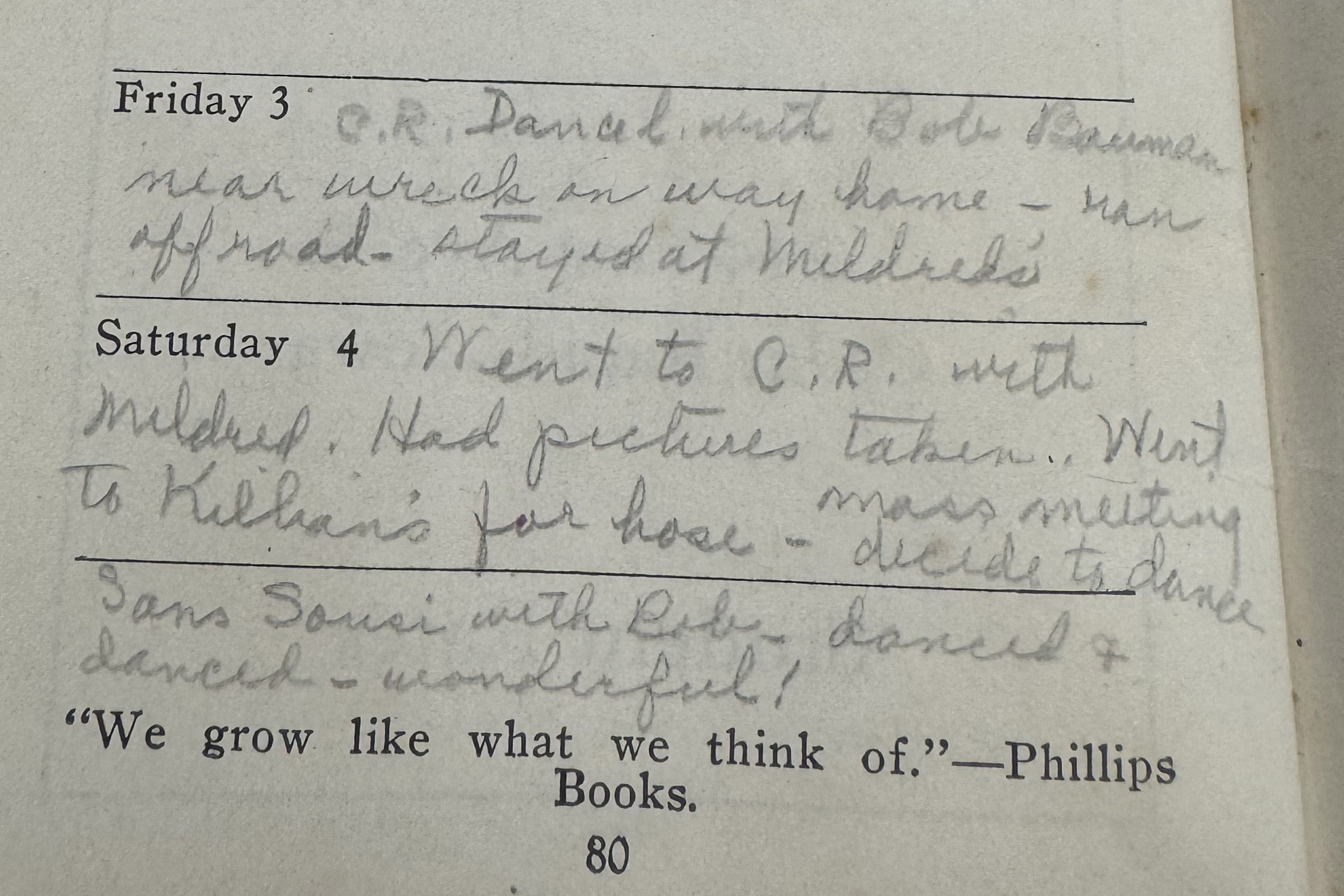
“Approximately half the student body showed up to this meeting,” Yamanishi said. “They had a conversation and talked about the pros and cons. The students decided, ‘we’ve got a band, we’ve got a big empty floor. Let’s show them with our bodies how serious we are.’”
The Mount Vernon Hawkeye-Record and Lisbon Herald newspaper summarized the meeting.
“Later in the meeting, after several students had expressed their beliefs that the plans for a dance should be carried out, one student who rose with the suggestion that ‘someone talk on the other side of the question’ was met with cries of ‘Do it yourself!’ However, no student voice was raised in opposition to the dance, and the one-sided ballot was taken a few minutes later.”
The motion to hold the dance passed by a vote of 248 to 48.
Bennington added that the students’ request to dance went even further than simply wanting a say in the rules guiding social interactions.
“There were a lot of bigger ideas at play, ’cause at the time, there was no student government,” Bennington said. “There were a handful of student officers who worked with the administration, but it was almost entirely on a committee-by-committee basis.”
So the issue wasn’t just about having a public dance on campus. What they really wanted was to have the ability to make decisions about their own social lives.
“The topic of discussion really came back to holding a vote to do this as a student body—to be able to act out democracy and have a voice,” Bennington said. “It was a dance for democracy.”
The air was buzzing with energy. Students were dressed for a party, standing amidst the carnival booths and food stands on the edges of the gym floor. There was an almost constant rustling of clothing and the low hum of voices as everyone shifted their weight back and forth, waiting for the evening to begin.
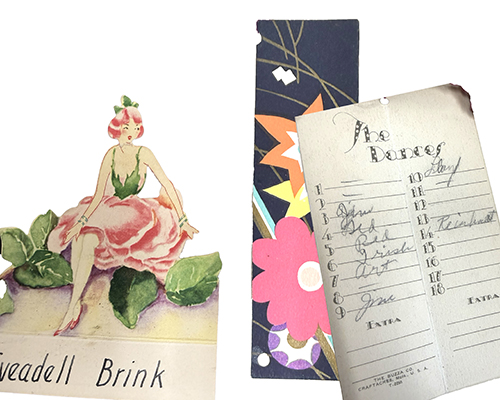
After a decade of petitions, editorials, and quiet cooperation, the moment finally came—not with a formal announcement, but with a ripple through the crowd. Someone stepped forward. Someone else followed. And suddenly, after years of being told they couldn’t, the students danced.
“It had been arranged at a mass meeting Saturday afternoon that dancing would begin at a given signal, soon after the close of the short stunt program,” wrote a student journalist in the Dec. 7, 1926, issue of The Cornellian. “However, the feeling was so intense that as soon as the orchestra began playing prior to the program, some couples started out, and the floor was soon crowded with a gay throng of dancers, apparently happy in the thought that for one evening, at least, Cornell’s social problem was not in evidence.”
It wasn’t the length of the dancing that mattered. It was the sight of it—students moving in a space where movement had meant expulsion, spontaneity rising in a room where compliance had been expected.
After years of debate, the dance itself lasted only minutes. But in those minutes, students crossed a boundary the institution had enforced for decades. The students had expressed themselves, and the administration was forced to face the music.
“So then there were emergency meetings and the faculty were trying to mediate between the students and the Board, because the Board was just aghast,” Yamanishi said. “And the compromise they came up with was that the students would be allowed to attend dances off campus, but not hold dances on campus.”
Although the results were not exactly what the student body had been requesting, the students had gotten what they wanted most: a chance to be heard. After approximately ten years of attempts to assert themselves, the administration was listening to them.
In the months and years that followed, the college explored the best way to approach the “social problem,” including organizing a year-long class in which students gathered data and made recommendations to the Board of Trustees. Afterward, the college agreed to no longer enforce the no-dancing rule. The small act of dancing at the Sans Souci Carnival became the revolutionary act of speaking up.
“The students decided, ‘We did this to make a point. We made our point. Now we’re going to go back to following the rules,’ so they did,” Yamanishi said.
It was a brief moment, but one that continues to resonate with students as they discover how to influence and define their own college experience.
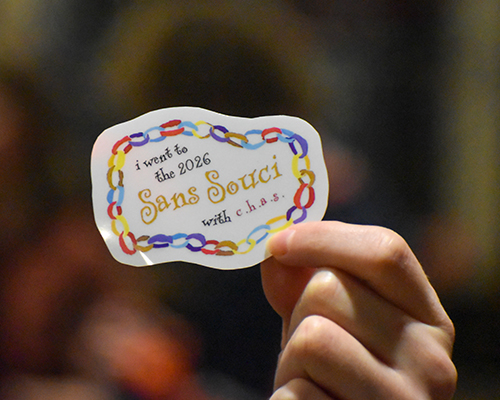
Bennington sees a strong parallel between students a century ago, who faced changing social norms after a world war and the Spanish flu pandemic, and her peers navigating life in a post‑COVID world. Driven by this feeling of connection, club members held a small revival of the Sans Souci Carnival this past February, and they’re already looking ahead to hosting another one, hoping to bring even more of the tradition back to life.
The revival of the Sans Souci Carnival is more than a nod to history; it’s a reminder that student life at Cornell has always evolved because students took an active role in shaping it. A century ago, a few minutes of dancing signaled a shift in what campus life could be. While the next generation will decide what the tradition becomes, the notes that started it still echo through the years. In that hope is the legacy of the original dancers—students who stepped forward, claimed the floor, and let their movement speak for them.