
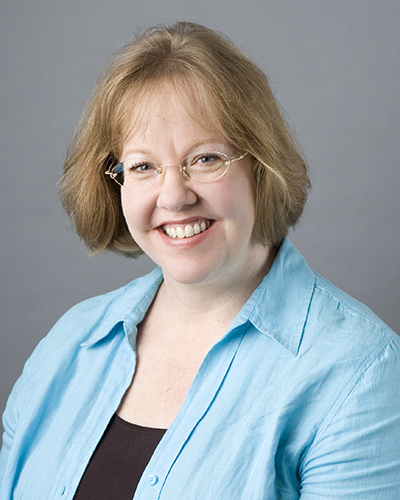
*Professor of History Catherine Stewart shares an update on her recent work over the summer.
I spent June and July serving as guest faculty for a National Endowment for the Humanities (NEH) Summer Institute on the Federal Writers’ Project.
The NEH Summer Institute brought together scholars and educators to explore the rich collections of the New Deal government project to put unemployed writers to work by documenting American history, culture, and people. The Federal Writers’ Project (FWP) created the nation’s first and only guidebook series, and supported writers such as Richard Wright, Zora Neale Hurston, and Ralph Ellison during the Great Depression. It also created the largest collection of oral histories of formerly enslaved people by employing writers to interview the last generation of Black Americans who experienced slavery and emancipation. My book, Long Past Slavery: Representing Race in the Federal Writers’ Project, looks at the complicated history of this project. I was excited to participate again in another NEH Summer Institute on the Federal Writers’ Project, which is the result of growing public interest in recreating a 21st-century version of the Federal Writers’ Project.
Building on the 2021 NEH Summer Institute on the FWP, this year’s Institute had a pedagogical and public humanities focus, fostering participants’ individual research on different aspects of the FWP for a variety of public-facing projects including folk culture performance, filmmaking, and exhibits, along with the development of new teaching materials and assignments for public schools and at the college level. The institute’s collaborative, research‑driven approach provided faculty with new methods for helping students engage deeply with primary sources, digital archives, and public‑facing humanities work with the goal of strengthening their historical awareness, civic engagement, and research skills. Twenty-five participants and 23 guest faculty from all across the country, and Japan, engaged in collaborative learning using the extensive archives of the Federal Writers’ Project. Guest faculty and participants represented different disciplinary and professional fields and included filmmakers, museum curators, podcasters, librarians, authors, and historians, as well as graduate students and independent scholars, which contributed to the dynamism and collegiality of the group.
During the institute, I presented and led sessions on the history of the Federal Writers’ Project endeavor to collect the oral testimonies of formerly enslaved people, and helped facilitate participants’ on-site research at the Library of Congress in Washington, D.C. It was wonderful to be part of such an engaged and diverse group of researchers and educators and it gave me a rare opportunity to conduct research alongside others working with this extensive collection. Archival research is usually a solitary and sometimes lonely endeavor, so sharing discoveries in real time and poring over rare sources together was especially meaningful. I was offered an opportunity to contribute to a forthcoming volume Working through the Federal Writers’ Project: Labor, Place, Archive, and Representation, using
the oral histories of workers in New York City. Looking at these narratives reminded me of how compelling first-person narratives can be for students of history, and I plan to incorporate them into my block 2 seminar on the evolution of work and leisure in American culture.
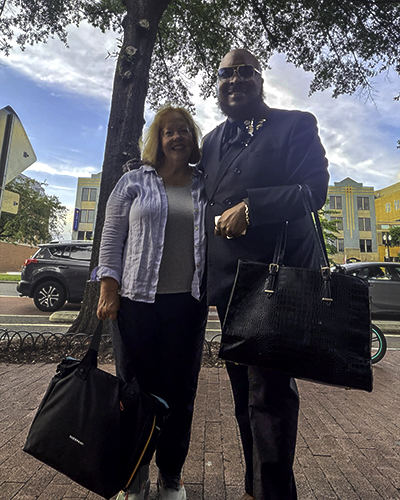
The institute also provided me with the opportunity to reconnect with archivist friends and curators at the Smithsonian’s National Museum of American History and the Library of Congress. I aim to create a future off-campus course that will enable students to explore D.C.’s museums and archives through the lens of public history. Strolling down Pennsylvania Avenue one evening, I ran into Khan Branch, class of 2016, who lives and works in D.C. Wherever you go, you’re never far away from the Hilltop, even in D.C.!
Stewart began teaching at Cornell College in 1999-2000, and was awarded the Richard and Norma Small Distinguished Professorship in 2015. She served as an invited scholar for two previous NEH programs on the Federal Writers’ Project, in 2021, and in 2023 as a guest speaker for a public symposium at the Library of Congress hosted by the American Folklife Center.