
As electricity demand continues to rise in Iowa, scientists are examining ways to meet the challenge in the 2026 Iowa Climate Statement.
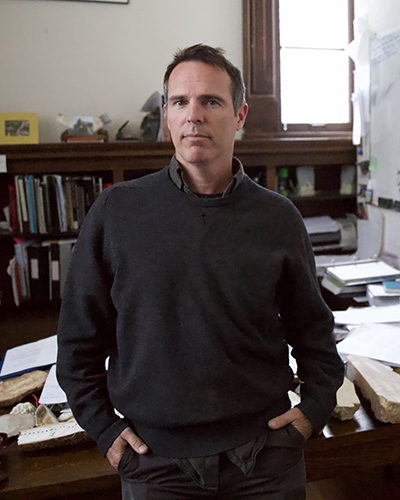
According to the authors of the 16th annual Iowa Climate Statement, including Cornell College Professor of Geology Rhawn Denniston, Iowa has been a leader in cheap, clean, and reliable wind and solar energy for decades. With electricity use rising sharply, due in part to the growth of data centers, Iowa can meet that demand by continuing to invest in projects that generate electricity from renewables, which would mean cleaner air and insulation from price shocks.
The Iowa Climate Statement presents science- and public policy-based information to help Iowans understand how climate change is impacting our state and to help local and state policymakers make informed decisions. The statement contains nearly 200 signatories, including four Cornell professors.
“We are ultimately concerned that climate change be addressed,” Denniston said. “This is a massive problem that until recently has moved at a rate that’s hard for people to recognize in their day-to-day lives, so it’s been easy to tune out. We all need to be aware of the wide array of risks climate change poses for Iowans. We need to understand those risks, and to recognize the long-term versus short-term trade-offs in taking action to reduce the damages we will face.”
Iowa Climate Statement 2026: A Fork in the Road for New Electricity Generation
Iowa, similar to the rest of the country, is seeing a rapid increase in electricity demand. How we address this challenge will have critical implications for our health and financial well-being. To meet this growth in our state, Iowa’s utility companies are planning to build new electricity generating capacity. So now we find ourselves at a fork in the road–Iowans can build more fossil fuel-generated power plants or continue to develop renewable energy resources.
Data centers, used primarily for artificial intelligence, are being constructed across the state at a rapid and accelerating pace.1,2 Iowa is among the top five states for the number of data centers per capita.3-5 In Linn County alone, four data center buildings are currently under construction, and another seventeen are in the planning process with similar installations slated in counties across the state.6,7 Data centers require enormous amounts of energy: they are projected to account for up to 12% of total electricity use in the United States as soon as 2028.8 In addition to data centers, increasing electrification of buildings, industry, and transportation will add to capacity demands.
We should expand the cleaner and more affordable path of renewable energy that Iowa chose to follow more than 20 years ago. Thanks to Iowa’s natural bounty of reliable wind, plenty of sunshine, and available land away from residential housing, Iowa generates over 60% of our electricity from wind and solar, making us the leader among all states.9 Iowa has abundant options for innovative solar installations, including as shading for parking lots, along public roadways, or in marginally productive farmland and brownfields. Wind and solar, coupled with advances in energy storage, complement each other nicely in Iowa: summer provides plentiful sunshine while winter has abundant wind.
Expanding renewable resources insulates us from global fossil-fuel price shocks, which have occurred three times in the last six years.10 Our effective deployment of renewables allows Iowans to limit natural gas to only 12% of electricity, while the national average is 41%.11 Electric bills in Iowa have remained low despite spiking natural gas prices; our electricity costs are nearly 30% below the national average.12,13 Burning less natural gas and coal also means that Iowans experience less air pollution and thus have faced fewer air pollution-related deaths and illnesses.14-17
In Iowa and globally, climate change and extreme weather continue unabated due to fossil fuel emissions. Using coal and natural gas to produce electricity accounts for one quarter of total US carbon dioxide emissions (roughly equivalent to the other two major sectors: transportation and industry).18 Renewable energy provides a readily available resource that does not add to increasing temperatures and is among the cheapest options available. By continuing on the path of renewables, Iowans will help civilization suffer fewer impacts from fossil fuel-driven climate change, such as heatwaves, floods, and wildfire smoke events.
Because of increased electricity demand driven primarily by AI data centers, Iowans face a fork in the road for new electricity generation. We have a choice to make, and we need to make it now. Rapidly rising electricity demand calls for every stakeholder—from ordinary Iowans, to tech industry leaders, to local elected officials and utility company executives—to advocate for and adopt cheaper, cleaner, and more efficient ways of generating electricity and to push back against roadblocks designed to selectively hinder renewable energy. As our climate continues to change, further investments in wind and solar power in Iowa will pay dividends in less expensive electricity and better health for generations to come.
The past three Climate Statements:
2026 Climate Statement References: