
 Gavin Collyott ’29 spent the summer taking the lead on a self-directed research project at the Rocky Mountain Regional VA Medical Center next to the University of Colorado Anschutz Medical Campus in Aurora, Colorado.
The medical campus is one of several employer sites that the Berry Career Institute (BCI) partners with each year. The internship enables the student to shape a meaningful research project in the medical field, take the lead, and present their results. Collyott, who chose to do the internship as one of his Ingenuity in Action credits, is also writing a blog to share his experiences.
The Missouri native was drawn to this internship because it aligned closely with his future goals in drug research. As a rising sophomore double majoring in mathematics and biochemistry and molecular biology, he’s got a strong vision for his future and is eager to take advantage of this opportunity.
“I have always been interested in drug research, and the lab I work in solely focuses on improving medical treatment for infectious diseases,” Collyott said. “I believed this would give me the best way to catapult myself into more advanced opportunities focusing on drug advancement down the road.”
Collyott used this excitement to help carry him through the application process, which is done through BCI, and included making a resume, submitting a budget sheet for his time in Colorado, and writing a personal statement. He was also interviewed by professors in the Dimensions Program for Health Professions at Cornell.
Now that he is in Colorado, he is working with two types of bacteria: tuberculosis (TB) and E. coli. After spending the
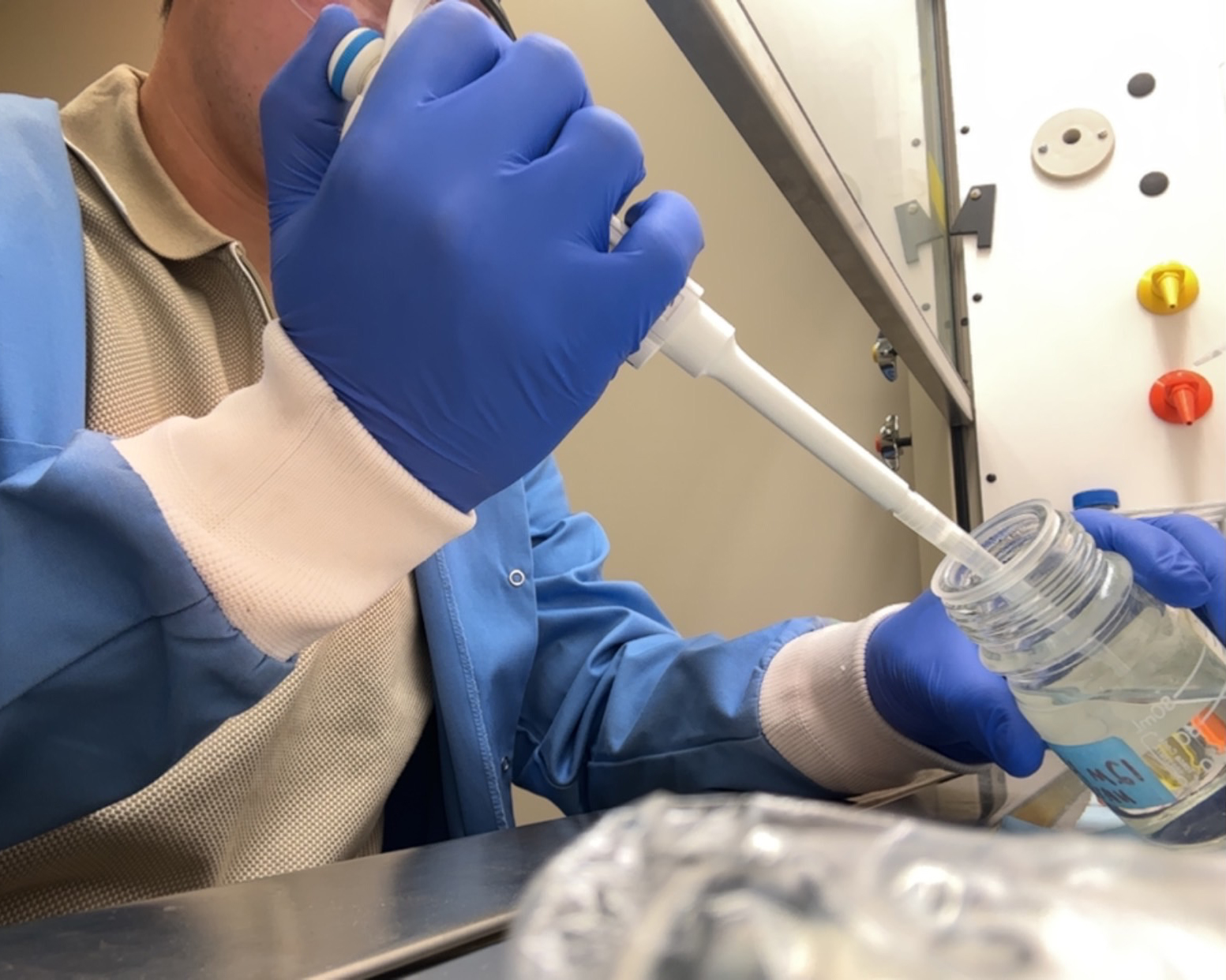
week cultivating TB bacteria, he uses each Friday to run an inhibitor test.
“What this does is test drugs that are very new and have not been cleared to be used in treatment,” Collyot said. “My job is to test these drugs, called inhibitors, to see if they can prevent the bacteria from reproducing and killing the cells.”
His second primary responsibility is cultivating the E. coli bacteria that is used in the inhibitor tests. Researchers engineered the E. coli to express an enzyme that TB depends on for survival. These enzymes require a metal compound to do their job. This is also where Collyott’s chosen research question comes into play.
“We are not really sure what the actual metal is that this enzyme uses while in the human body. Therefore, for the past eight weeks, I have been working to try and deduce what the metal is,” Collyott said. “The goal is to help others take this information and then apply it to their own drug research, thus helping advance medicinal knowledge for tuberculosis overall.”
This ties in directly with his plans for the future. Collyott hopes to study infectious disease, pursue a Ph.D. in pharmacology or immunology, and eventually work in drug research. He credits Cornell with giving him all the resources and support he needed, including the opportunity to apply for Ingenuity in Action funding.
“Being only one of a few to be in an internship of this high caliber after just finishing one year of my undergraduate studies feels surreal,” Collyott said. “I am in a position where I could even look at being published as a primary author in a paper. All of it would be focused on my own research, and to have that opportunity so early on really sets my future up well. I could not be more grateful for being chosen.”
The internship also comes with a wide variety of experiences in other research labs. His favorite activity this summer was in the endocrinology lab down the hall from where he was working.
“They focus on the aortic valve within the heart and its effect on cardiovascular health,” Collyott said. “I was able to help and harvest samples of the aorta that were used for research purposes.”
He added that internships are something every student should consider. Whether or not you feel qualified, he said, you should try for it anyway; you never know what you might learn. For this rising sophomore, he learned many things—among them perseverance.
“A really big thing I had to learn about this type of work is the pure amount of failure involved,” Collyott said. “No matter who you are, you are going to fail in the research industry.”
Once I was able to understand that failure is inevitable,” Collyott said, “I started embracing more of my ideas, with less fear that they may work, and more optimism about what they can tell me if they do work.”
To learn more about this, or other opportunities, visit the Berry Career Institute online or in person.