
Misreading someone’s political identity might seem like a small mistake, but two Cornell Summer Research Institute (CSRI) students are uncovering just how much those errors can shape social interactions by examining how people interpret—and misinterpret—political identity cues.
“It’s essentially impossible to avoid politics and to avoid living in a political world,” rising senior Luis Andres Román Bonilla ’27 said. “It's important to know how people express that political party identity and how they feel when that political party identity is detected, so we know why people are acting the way they are, and where people feel more or less comfortable when it comes to politics.”
Watch their CSRI research unfold in this video:
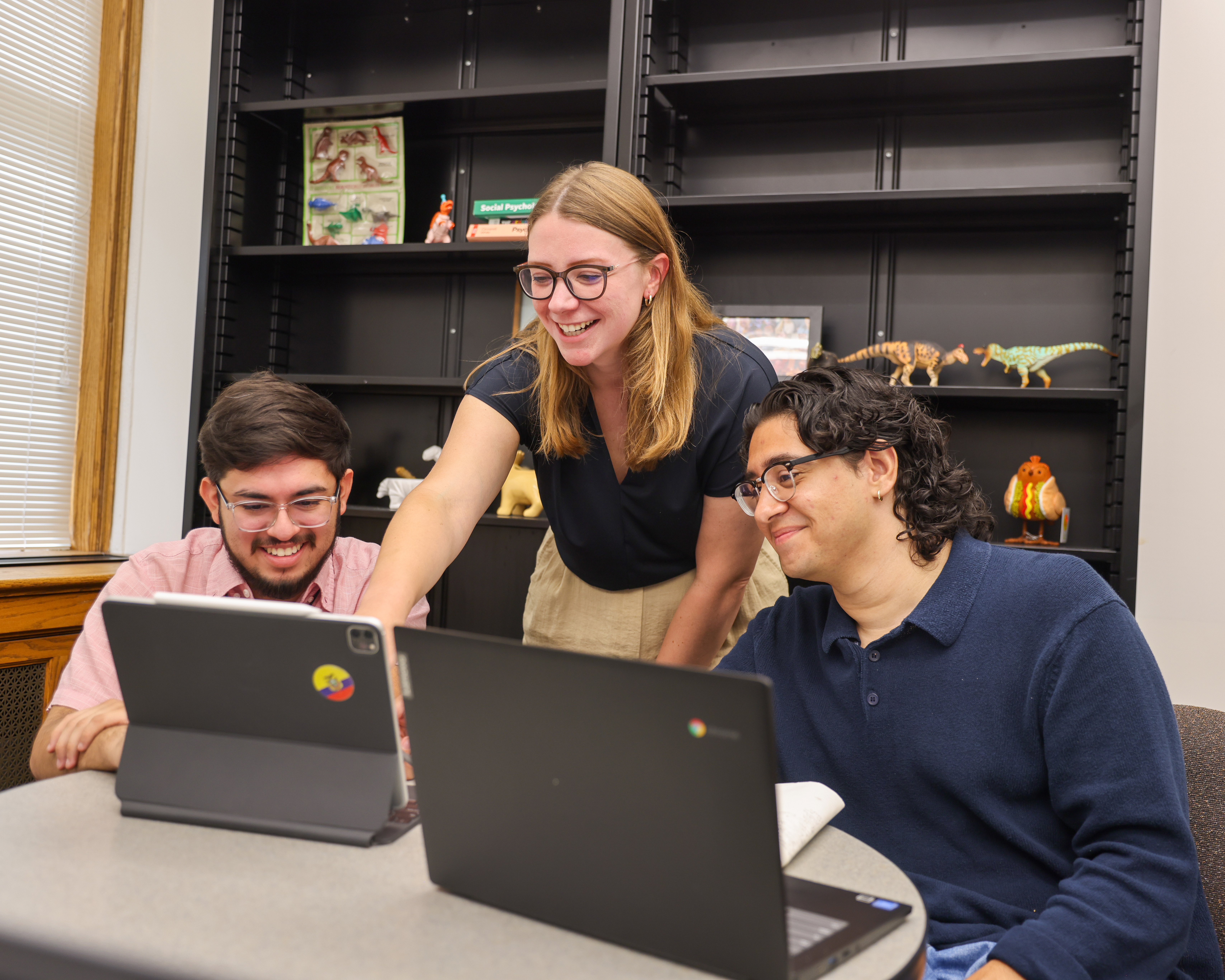
Guided by Assistant Professor of Psychology Samantha Heiman, Román Bonilla and his teammate, rising senior Valentin Andrade ’27, are examining the psychology behind these common signals. Whether it’s intentional signalling, like wearing clothing or pins that support a specific candidate, or unintentional signalling, like dyed hair, driving a hybrid vehicle, or shopping at specific stores, they say everyday choices are telling those around you what political party you align with.
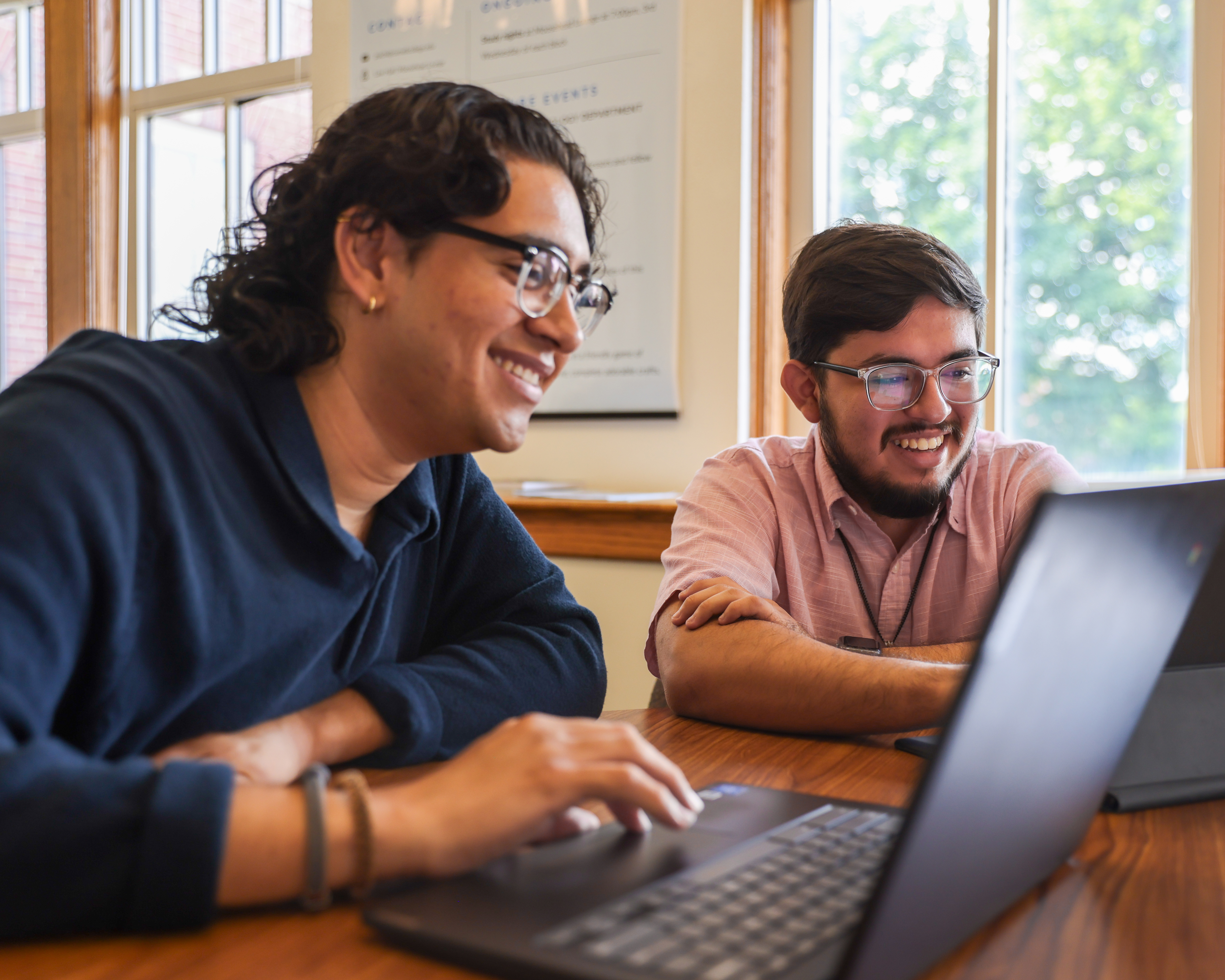
“I think people have realized that everything is political, and so people are starting to be a lot more aware of how they behave in terms of politics and in their day-to-day lives,” Andrade said. “This research shows that those feelings are not only valid, but are worth considering and worth studying because the better we understand them, the better we can deal with those situations.”
Over the course of CSRI’s eight weeks, the students will work with the Institutional Review Board (IRB), place a survey on an online platform called CloudResearch, gather data and enter it into a free data-processing program called RStudio, and spend hours interpreting and discussing the survey responses.
“So we have two students, both working on different workflows, both the manuscript writing and the data analysis. … I'm trying to be hands-on in the sense that I'm definitely willing to answer questions, meet with them daily, keep going on goals, but hands off enough that you know they can work on things independently,” Heiman said. “I think one thing that's really important about this type of experience is to get that independent research experience, and to learn how to solve problems on your own.”
By the end of the program, the students will have created and given a conference-ready presentation, written up their results and conclusions for a journal article, and gained skills that will help them in their future careers.
Román Bonilla, a double major in statistics and psychology with a minor in statistics, hopes to go on to grad school. With goals to be a research psychologist or professor in the areas of social psychology, he found this CSRI project to be the perfect opportunity.
“It's going to be, first of all, confirmation that it's something that I want to continue to do, and that's something thatI want to dedicate my life to,” Román Bonilla said. “But also, having the experience of having really done research looks great for grad school applications. Not only that, I think it's both a testament to myself that what we learn in the classroom can actually be practiced in a professional setting.”
Although his future goals revolve around music therapy, Andrade also believes CSRI will help him with his future plans.
“I don't consider myself that great of a writer yet, but this is my opportunity to really build on those skills, especially given how important they are to the field of psychology, and to familiarize myself with the process—especially when it comes to clinical research,” Andrade said. “Having human participants in experiments for psychology can be really specific. So starting to get a little bit of that experience with the IRB process, as well as the more technical aspects of research, that experience is very much a worthwhile kind of experience.”