
David Joyce Professor of Economics and Business Todd Knoop has published a second edition of his book, “Understanding Economic Inequality: Bigger Pies and Just Deserts.”
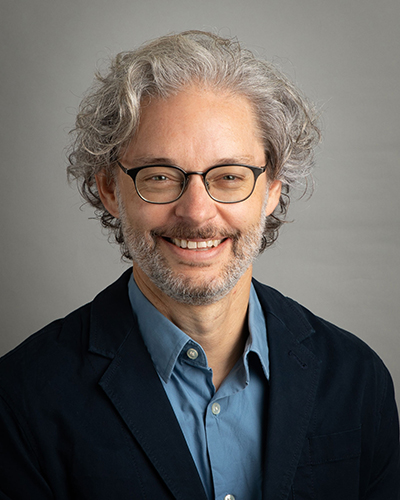
This book applies an economist’s perspective, combined with insights from philosophy, sociology, psychology, and politics, to investigate why economic inequality is widening and why it matters. Economic inequality is the variation in income or wealth between people.
Knoop wrote the first edition in 2020 and has spent the past five years researching and writing the updated version. After all, a lot has happened in the past five years—AI has exploded onto the scene, and the COVID-19 pandemic, or the “inequality virus” as it’s sometimes called, has disrupted the lives of many workers. Knoop examines the many ways that inequality has changed and continues to change society in the second edition of his book.
What motivated you to write the second edition of this book?
Since I wrote the first edition, the world has only grown more unequal, social and political polarization has only increased, and COVID-19 and AI only threaten to make these trends worse. So it seemed like a time to take a second look at the ways that economic inequality threatens our society and our economy.
How does economic inequality impact societal systems?
When excessive inequality becomes the norm, its corrosive effects trickle down in obvious and non-obvious ways throughout our economic and social systems, creating the possibility of an endless variety of negative feedback effects and poverty traps. Likewise, the potential is there for greater egalitarianism to create virtuous circles that allow for more trust and cooperation, for people to be more motivated because they feel more valued, for larger and deeper networks of people to create more leaks and matches, and for efficiency to expand as equality expands. This book explains the multiple channels through which more unequal societies also become less productive societies, and vice versa.
How did the pandemic impact economic inequality?
In the short-run, the pandemic’s impact on inequality was mitigated by the fact that governments responded aggressively to the pandemic and prevented many—but not all—of the most damaging consequences for employment, poverty, and child welfare.
The ongoing impacts of the pandemic on inequality will operate through three channels. First, the COVID-19 pandemic disproportionately disadvantaged poorer workers, particularly those who were less educated or could not work virtually. Second, the pandemic also further weakened institutions by fostering civil discord and polarization. The third channel is education. More educated workers had a greater ability to avoid many of the costliest aspects of the pandemic through telework, supervised at-home learning for their children, more virtual learning resources, and online access to the entire consumer economy. Inequality has never been more apparent, nor more costly, than it was during the peak waves of the COVID-19 pandemic.
How could governments reduce economic disparities?
Many people have the perception that there is a trade-off between higher income and higher inequality levels. A close look at history tells us that this is not true. Instead, the levels of inequality within countries are the result of political choices. For any given level of development, there is a wide range of possible inequality outcomes. The fact that inequality has risen across the globe does not mean that government policy is no longer effective in dealing with inequality; it means that governments are no longer trying as hard. Governments can reduce inequality by imposing structural inequality policies (such as changes in labor laws, creating more market competition, and improving education) aimed at fundamentally changing the organization of markets and of inequality in market income. Governments can also use fiscal policy to directly transfer resources from the richer to the poorer citizens, such as increasing the progressiveness of taxation and providing universal guaranteed incomes. There are lots of tools. The determining factor of inequality is whether countries decide to use them.
In your research, did you find any hope in what the future will bring?
We have seen many countries that have adopted more egalitarian economic policies—for instance, Scandinavian countries. There is one characteristic that they all share. In each of these more egalitarian countries, there is a fundamental and widely held belief that there exists a social compact between citizens, and when some people have dramatically more than others, this social compact is jeopardized. There is a widely held belief that inequality threatens social order, it threatens institutions, it threatens economic productivity, it threatens happiness, and it threatens the basic quality of life. When a country’s citizens generally share this belief, it creates the political will to influence political systems, which, in turn, changes economic policies. This appears to be the most fundamental difference between equal and unequal countries: Do their citizens care enough, or don’t they? I still believe that people can become informed on the costs of inequality, and once informed, they can be made to care enough. That is why I wrote this book.