
Like a kaleidoscope turning in the light, our memories from the Hilltop shimmer with the colors of every person who’s been part of our story. Join us as we celebrate the unique ties that bind Cornellians together in our alphabetical collection that covers the history, evolution, and current state of all things Cornell. From Ash Park to Zamora’s, you might just find something here that makes you fall a little more in love with Cornell.
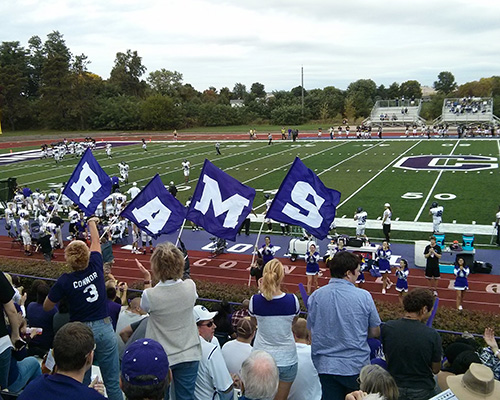
Cornell’s Ash Park athletic complex may be the busiest and most purple part of campus; the days and nights are jam-packed with practices, conditioning, classes, and competitions for our 20—soon to be 21 with the addition of women's flag football—NCAA athletic teams. Add to that the 30,000 fans who flock (pun intended) to Rams competitions annually. Way back in 1891, Cornell purchased this land from the family of settler Reuben Ash, and that very year, on this very spot, Cornell beat Coe 82-0 in the game that began the oldest college football rivalry west of the Mississippi.
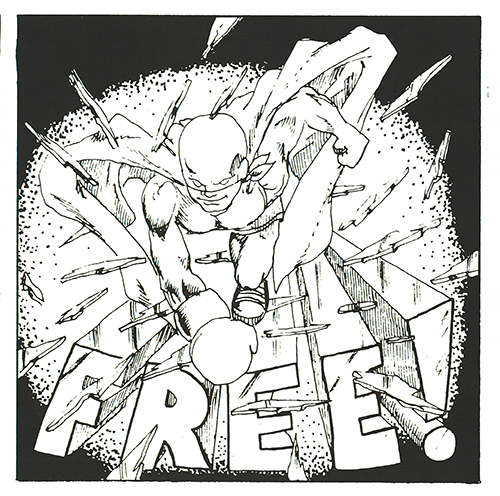
Little did we know when the Brown Bomber emerged from the pages of The Cornellian in 1977 that he would become the oldest continuing Black gay comic strip character in the U.S. Rupert Kinnard ’79 began sketching his nonviolent superhero the summer before arriving on campus, and when The Cornellian editors heard about his sketchbooks, they asked him to provide editorial cartoons.
Recognition has been flowing to Kinnard for several decades now. In 2021 he was among the five cartoonists featured in the documentary “No Straight Lines: The Rise of Queer Comics.” Kinnard held a retrospective exhibit on campus in 2022.
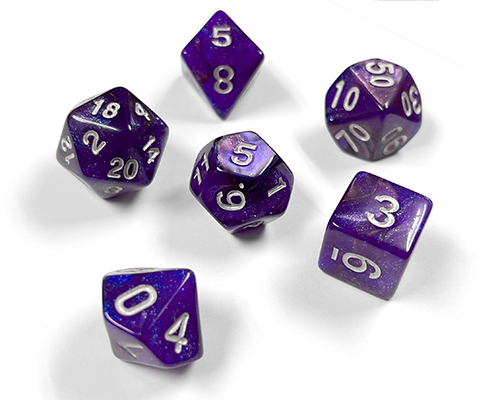
Chess and Games is a student organization that’s exactly what you would expect and more than you could imagine. It includes traditional chess and board game activities, as well as newer party, fighting, and trading card games. Pokémon anyone?
While mentions of students wanting a gaming space—involving chess, checkers, backgammon, and pool—appear as early as a letter to the editor in a 1916 issue of The Cornellian, Chess and Games Club first appeared as a student organization in the Royal Purple in 1986. The students behind the gaming group host a variety of activities and events in their often boisterous quest to bring fun—and chess—to campus.
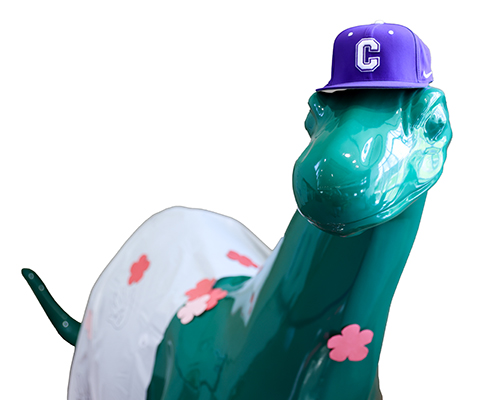
Some places have a friendly ghost; Cornell has a friendly dinosaur. Living on the third floor of Cole Library, where he keeps watch over studying students, we think Norton is the friendliest dinosaur in the whole country.
Norton’s Cornell story all starts with photos. From the 1980s to the early 2000s, students collected photos of themselves posing with Sinclair dinosaurs around eastern Iowa. Six months into the COVID lockdown, a group of alumni, including Mandy Landuyt McDowell ’99, decided to answer the question, “What if we could put that dinosaur on campus?” After two years of phone calls, fundraising, and digging—and the help of the Sinclair company—Norton, named after Norton Geology Center, arrived at his Cornell home in July 2022. He is a feature on student tours, dresses in seasonal costumes, and is the centerpiece of student selfies. His handler, Librarian Meghan Yaminishi, passed along this note: “We don’t really know what gender Norton is, so costuming isn’t limited by gender expectations.”

Computers, LAN parties, and knock-down, drag-out, smashing brawls between Mario and Link, have been around campus for decades. Esports and the Cornell Esports Arena in Thomas Commons, however, arrived in 2019. The program has a roster of about 45 students and 11 teams that compete in games like League of Legends, Overwatch 2, and Rocket League. With an on-campus coach and specialized, online coaches for individual games, most teams practice two or three days a week and compete in two official matches a week. The teams currently have seven different individual game titles and numerous accolades, including the Missouri Valley Esports Conference Commissioner’s Cup.
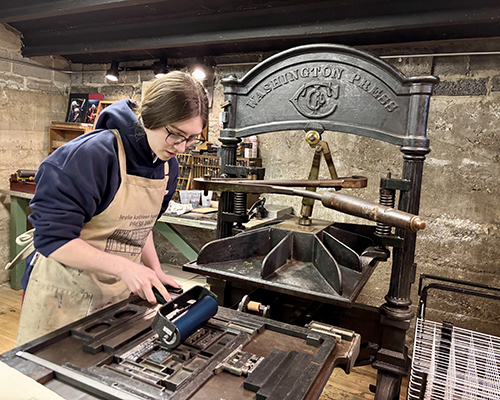
The feel of aged wood and metal in your hand as you pick your font and place each sort and space on the composing stick. The smell of ink. The softness and subtle colors of paper. The cool weight of the brayer in your palm as you roll on the ink, before pulling the lever to press paper to type. Those sensations only exist with an iron hand press like the one used in Foxden Press, located at the Center for the Literary Arts in the Van Etten-Lacey House. Established at Cornell in 2013 through the enterprise and labor of professors Leslie Hankins, Michelle Mouton, and Kirilka Stavreva, Foxden Press is the latest iteration of a Cornell book-making history that stretches back to the early 20th century. Today, students and faculty collaborate on a hands-on intersection of art, words, and history, making broadsides, cards, and “book sculptures” that house the written word within letterpress-printed, folded, stitched, and creatively bound booklets.
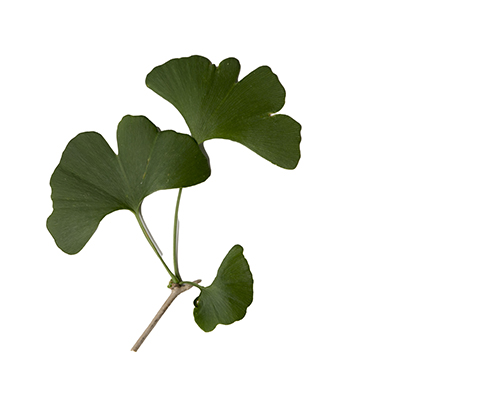
The most storied tree on Cornell’s campus is the male ginkgo biloba next to the Garner President’s House. Since it is native to East Asia, its arrival in Mount Vernon approximately 175 years ago is a mystery. The ginkgo is an ancient species associated with longevity, resilience, and good fortune, and this very tree is a testament to all three. Before they stopped keeping track, it was declared the largest (and thus likely the oldest) ginkgo in the state. Incredibly resilient, it survived the 2020 derecho that took out more than 200 trees on campus. And luck? Perhaps it relates to the ginkgo’s nickname, maidenhair tree. Generations of Cornell women once believed their wishes would come true—or that they would see the face of their beloved in their mirrors while combing their hair under the moonlit Cornell ginkgo. The 1952 handbook for new students called it “A lovely tradition concerning bewitchment and romance.”
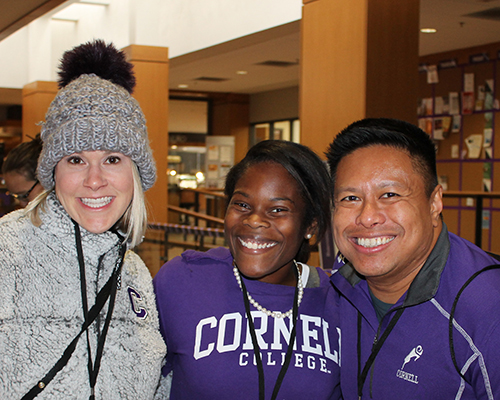
The heart of Homecoming is being #HomeOnTheHilltop. There’s nothing quite like reuniting with your college besties, watching the Rams battle a rival team on the gridiron, or catching up with your favorite professor during Cornell’s Homecoming and Reunion Weekend. It’s a time when bright orange, red, and yellow trees fill campus, and every conversation starts with “remember when.” Whether you attend the art exhibit, Homecoming Convocation, football game, reunion gatherings, or any other event, the weekend is a chance to reconnect with friends and return to a place that always feels like home.
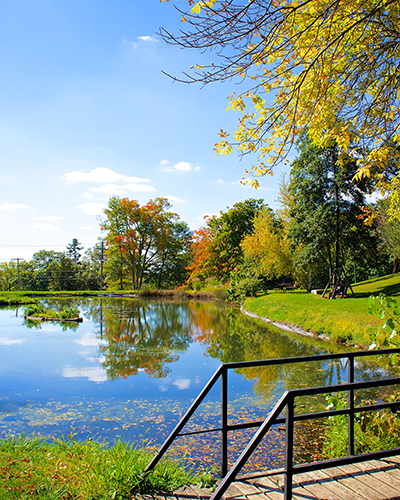
Despite its small size, Ink Pond is one of the iconic elements of life on the Hilltop. It was dug in 1966 and named after Raymond P. Ink, Class of 1897, in honor of the many years he allowed Cornellians to use his farm pond for freshman versus sophomore tug of war. Now it’s home to a pair of geese, and the shallow valley protecting Ink Pond provides a calm place of reflection any time it’s needed. If you chance a visit in the spring, the idyllic atmosphere gets a seriously cute twist in the form of the fluffy goslings that hatch each year.
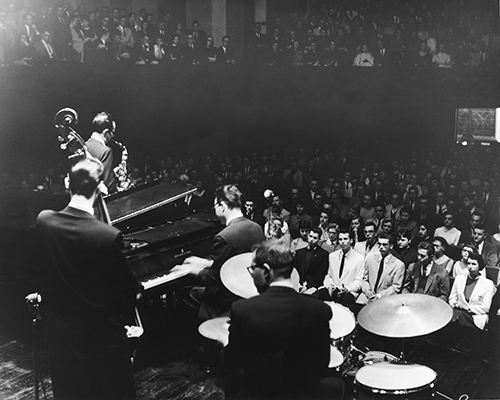
From 1957 to 1980, Cornell hosted four legendary jazz artists in King Chapel. The first was the Dave Brubeck Quartet in 1957—two years after Brubeck appeared on the cover of Time magazine. The quartet returned in 1961, just before the radio release of “Take Five,” the biggest-selling jazz song of all time.
Cornell’s Spring Music Festival brought the next three greats. Tenor saxophonist Sonny Rollins, one of the most important and influential figures in jazz history, performed in 1977. The following year Joe Pass—a pioneer in establishing the guitar as a solo jazz instrument—also played in the chapel. On May 2, 1980, the Bill Evans Trio performed for the festival, and Evans, a legend of piano jazz, took a turn with the Cornell Jazz Band. Evans was part of Miles Davis’ sextet that in 1959 recorded “Kind of Blue,” the best-selling jazz album of all time. The Cornell concert was to be one of Evans’ last, as he died four months later at age 51.
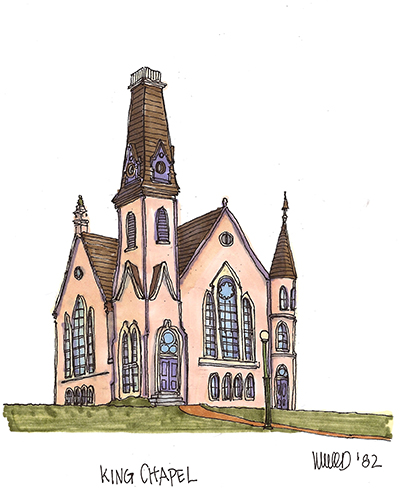
King Chapel is the first thing you see when you approach Mount Vernon, and with the cornerstone laid on June 22, 1876, it has been a fixture on the Hilltop for all but about 20 years’ worth of Cornell graduates. Completing it required faculty to donate 25% of their salary back to the college. It has served many purposes, including housing a library, armory, museums, chapel services, and concerts. The building is currently under construction due to damage caused by the hurricane-force winds of the 2020 derecho. Over the years, the voices of famous visitors such as Martin Luther King Jr., Frank Lloyd Wright, and Gloria Steinem have filled the chapel, sharing inspirational and educational messages with our campus community.
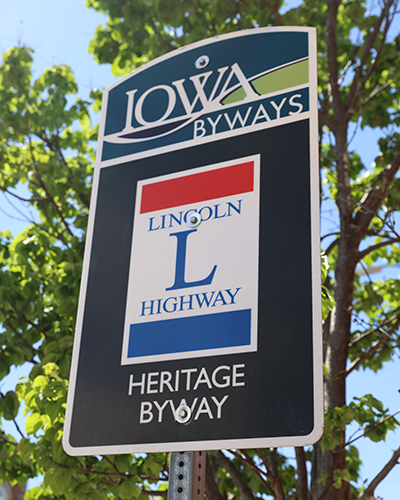
The Lincoln Highway was the first transcontinental highway in the country, joining New York City to San Francisco. In 1913 automobile enthusiasts established the Lincoln Highway Association to chart a path from coast to coast, which included our part of Iowa. It was 3,389 miles long and was eventually mostly incorporated into U.S. Route 30. Having the highway through town meant more business and a connection to the nation, providing a sense of identity to the places included on “The Main Street Across America.” People can still travel this route today, following the signs that mark the path to, through, and beyondMMount Vernon.

Once named among America’s Coolest Small Towns, Mount Vernon has a charming Uptown, complete with annual festivals and activities. Cornellians are often intermixed with the community, exploring small shops, studying at local coffee joints, or finding a meal in one of the diners just blocks from campus. The Lunch Buddies program and shared library are just two examples of how symbiotic Mount Vernon and Cornell truly are. With a history that stretches back to 1847, just six years before the founding of Cornell, Mount Vernon is as much a part of the college’s history as the students.

Cornell’s campus is not just beautiful, it’s an actual national treasure. In 1980 it became the first campus named in its entirety to the National Register of Historic Places. King Chapel was listed in 1976, 100 years after the laying of its cornerstone. The full campus followed four years later, thanks to Professor Emeritus The Rev. Richard Thomas who led the extensive research and application process. He once wrote for this magazine: “For a college such as Cornell, founded by a Methodist minister, the ideal setting for learning is in the midst of a quiet place of beauty. It requires a vista as a constant reminder of the greatness of the creator … A place where the learners know the power of the wind, the bitterness of the blizzard, as well as the unspeakable colors of autumn leaves.”
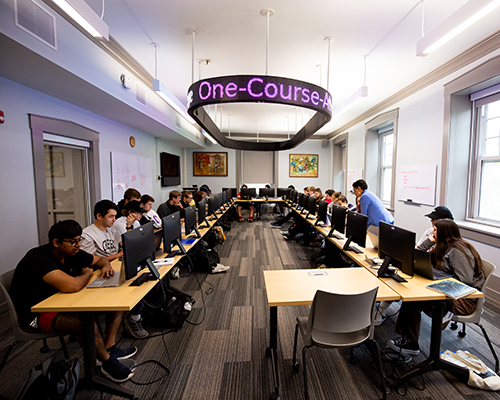
At Cornell, we can do anything in 18 days. We’ve been living, learning, and teaching on the block plan, One Course At A Time, since 1978, when we left the traditional semester plan behind. Our students, professors, and alums agree that once you’ve studied on the block plan, nothing else compares to it. Remember that feeling of finishing Organic Chemistry, Spanish, or Statistics in just 3 ½ weeks? Cornellians tackle a full academic year in eight blocks (used to be nine). It’s a 32-part adventure on a four-year journey of excellence.
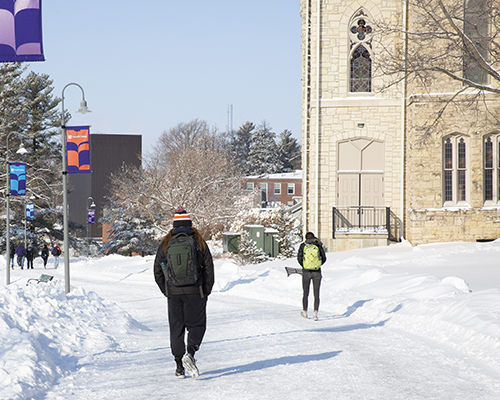
Whether you are making your way to class on the first day of your Cornell journey, or walking to lunch before an afternoon in the lab, chances are high that more than one person will wave or share a friendly “Hello!” The Ped Mall is the main artery of campus, leading from the Thomas Commons, past King Chapel and Cole Library, all the way to the east edge of campus. It was replaced and upgraded in 2002, when it officially became the Marie Fletcher Carter Pedestrian Mall, and was extended in 2019 to reach the newly constructed Russell Science Center. This brick thoroughfare is a community-building powerhouse where an uplifting smile is only as far away as the next person you pass on your way to class.
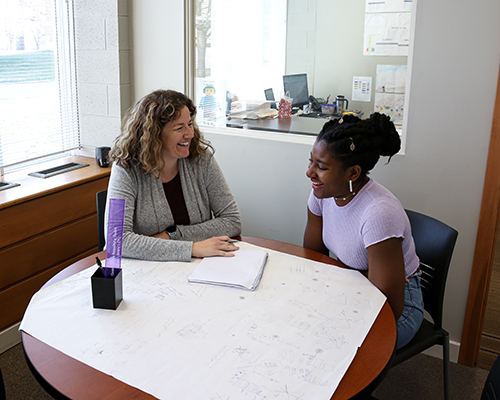
For math, science, accounting, or even stats surrounding Taylor Swift’s music, peer consultants in Cole Library are here to help. Under the guidance of Quantitative Reasoning Studio Director Jessica Johanningmeier, the studio provides over 1,000 sessions per year to support students with any homework, research, or project involving numbers.
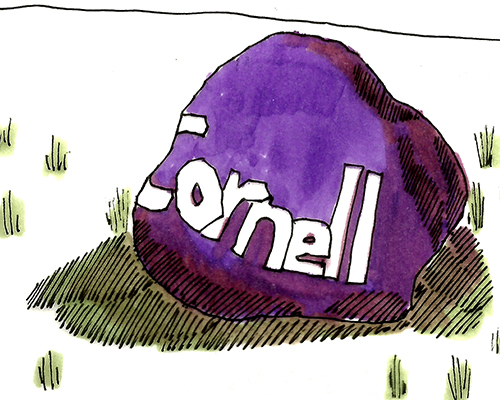
The Rock—and we’re not talking about Dwayne Johnson—is a Cornell tradition that stretches back to 1889, when the senior class transported a 5,000-pound boulder from The Pal to campus and carved their class year into the granite. Since then, it’s been painted, burned, moved, stolen, and given googly eyes.
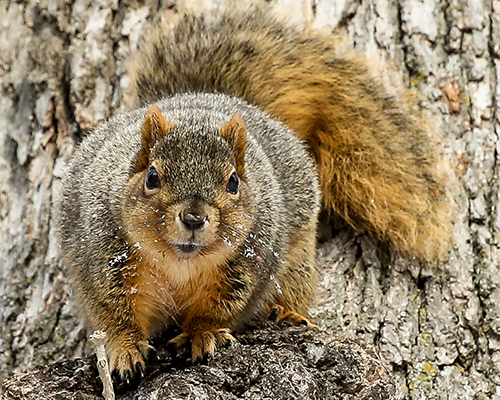
Despite squirrels not being unique to Cornell’s campus, we like to think of ours as the best. The Cornell Chunkies are sure to make you smile as they scamper across campus and up trees.
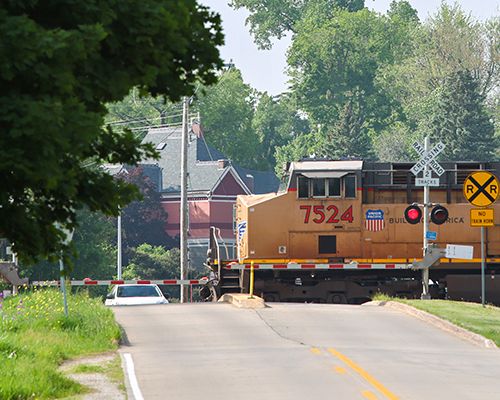
Do you remember hearing the trains wail through town when you first moved into your residence hall? It’s jarring at first, but soon becomes a wonderful and familiar part of life on the Hilltop. The piercing call of train whistles has been part of Cornell since the first train arrived in 1859. Cornell was at the crossroads of early transportation routes with the founding of Mount Vernon on the Military Road (Highway 1). The trains brought students to campus and, famously, the Chicago Symphony Orchestra, which played on campus annually for 61 years. Union Pacific still sends around 25 freight trains a day through Mount Vernon, but they are less noticeable since Mount Vernon became a quiet zone in recent years.
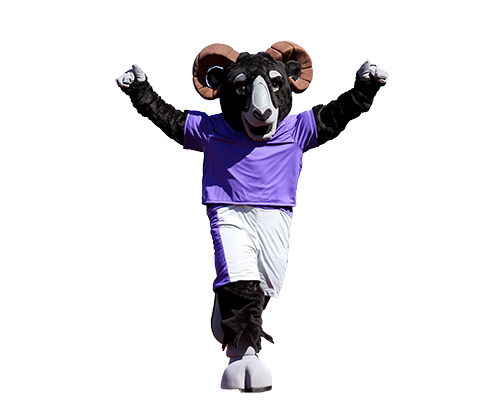
Mascots may be meant for the sidelines at sporting events, but Ulysses isn’t afraid to put in some overtime, often appearing around campus for photo ops and special events. Cornell has had several team names and mascots over the years, including an early stint as the Rams back in 1906, but it wasn’t until a student vote during a Royal Purple contest in the late 1940s that the current mascot finally stuck. According to The Cornellian, the ram was chosen because it is “usually thought of as a strong animal high on a hilltop.” In the early years as the Rams, live animals were used as the mascot, including one named Rex Alarius Maximillian I in 1961. The name Ulysses first showed up as a mascot name in The Cornellian in 1975. By the mid-1980s, the live ram had been mostly replaced by a costumed mascot, although the name Ulysses stuck. Over the ensuing decades, the costume has received several updates. Today, he has black fur, brown horns, and, of course, Cornell purple athletic gear.
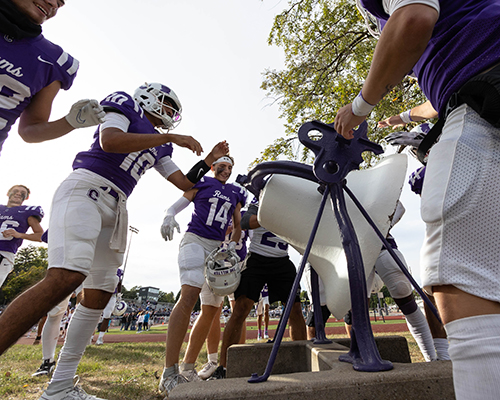
The sweet sound of a hard-earned win comes from a victory bell on Cornell’s Van Metre Field at Ash Park. Athletes ring the bell following home wins and significant road wins. This is one of the more recently renewed traditions at Cornell. Back in the 1910s and 20s, there are references in issues of The Cornellian to ringing the victory bell—the chapel bell at that point—for everything from football to debate wins. Freshmen raced to the chapel and rang the bell for five minutes up to 30 minutes. Once in the mid-’40s it even rang for an hour after a last-minute Homecoming win. Today, Rams enjoy every second of celebrating the win by gathering around the victory bell and taking turns ringing it. Go Rams!
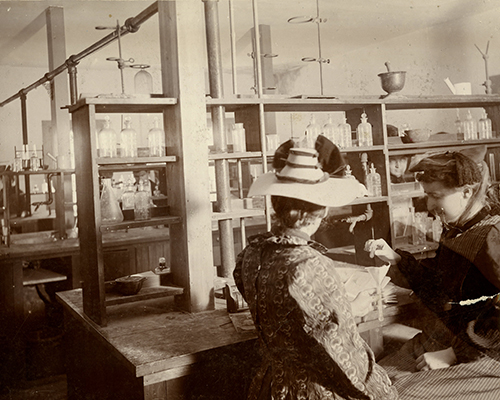
Cornell College was a pioneer for gender equality. It was one of the first coeducational institutions of higher education in the nation, and the very first in Iowa, when it opened for women and men in 1853. At a time when some academic subjects were considered inappropriate for “mixed” company or too “indelicate” for women, Cornell women were admitted to the same degree programs and courses with the same privileges as men. They studied equally alongside men, most notably in science classes and labs, before women at most other colleges did so.
In 1858 Mary Fellows received her Cornell diploma and became the first woman to receive a baccalaureate degree from a college west of the Mississippi River. And in 1871 Professor Harriette J. Cooke was promoted to full professor of German and history and, in what is believed to be a first in higher education, given pay equal to her male colleagues.
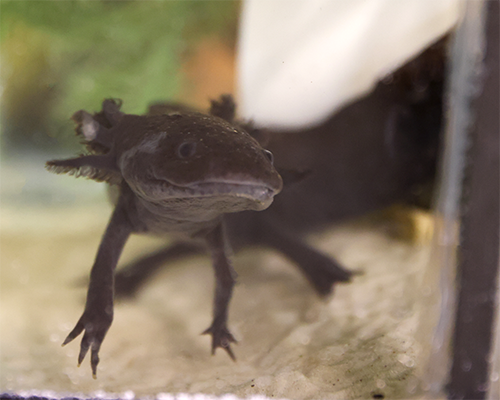
It may be surprising to learn there’s one axolotl on campus—let alone two. These salamanders have external gill stalks, live for 10 to 15 years, can regenerate nearly any body part (even part of their brains), and are critically endangered in the wild. Brought here by Belou Quimby ’19, Xotchil (pronounced so-CHEEL) and Loc (LOH-k) were born in 2021 and are happy to entertain students who slip into Russell Science Center to study and watch their underwater antics. It’s no surprise, either; their squishy faces and sedate movements are sure to charm anyone who meets them.
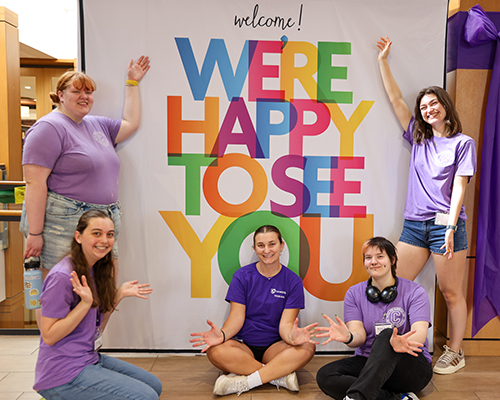
As we reach the end of our Cornell alphabet, letter Y is, perhaps, the most important. Why? Because it’s you! Without each of you, Cornell wouldn’t be what it is today. We have around 16,500 living Cornell alumni and many more who came before you, all the way back to the very first graduates in 1858. Each of your experiences on our Hilltop campus and the stories you tell about your time in Mount Vernon are part of Cornell’s story.
You come back to visit for special events, you’ve accomplished a lot after graduation, you stay engaged with us on social media, you cheer on Rams from near and far, many of you give to the college’s endowment supporting the next generation of Cornellians, and you make Cornell pretty great—from A–Z.
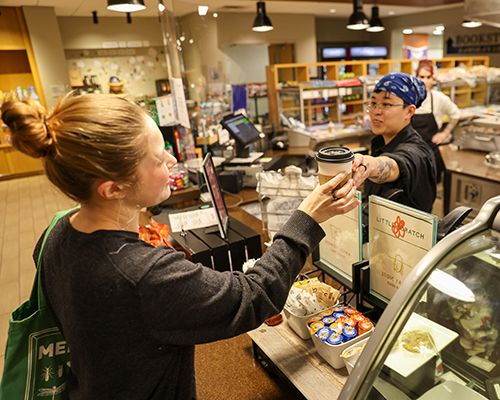
Students love a good snack, and snack bars go way back at Cornell. First came George’s Grill, the first and second Cole Bin, a snack bar in Cole Library, and then the Rathskeller (the Ratt) in the Commons. Starting in 2013, however, that snack bar was remodeled and dubbed Zamora’s Market. Located right next to the Orange Carpet and named after world-traveler Henry Zamora ’33, Zamora’s currently offers the traditional grilled sandwiches, a variety of baked goods, coffee, and snacks, as well as tables and a lounge. A place to eat, study, or socialize, Zamora’s Market, lovingly called Zam’s by the students, is a frequent stop for many students and staff.