
Trees for the next generation
Professor Emeritus of Classics Charles Milhauser wrote in 1986, “with the exception of the tower of King Chapel, the most noticeable feature of Cornell’s campus is its trees.”
Five years ago, on Aug. 10, 2020, a storm that many meteorologists described as an inland hurricane blew through Linn County. The derecho took out 211 campus trees and damaged 160 others, requiring serious pruning and limb removal. Grounds Coordinator Charles Trachta and Facilities Services Manager Cari Morgan sheltered in their offices when the winds picked up to 140 mph that day.
“That was a pretty tough day,” Trachta said.
“It was a pretty tough next month or so,” Morgan added.
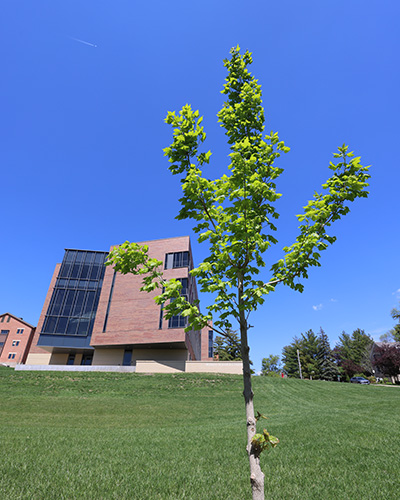
Little did they know it would take their team and hired tree services five years to clean up and replace what was destroyed. Since then, they’ve planted 250 trees—more than the storm took away. In fact, they’ve reached a point where there’s currently no more space to plant trees on campus.
“You’ve got to be very strategic in what you plant, how you plant it, and where you plant it,” Morgan said.
Trachta, who has worked with the trees on campus for 13 years, has led the way in replanting Cornell’s campus.
“At first I tried to match what was there before,” Trachta said. “If we removed a red maple, we would put a red maple back in. We did that for the first 115 trees or so. Then we started to diversify with species like sweet gum, crab apples, pawpaws, persimmons, and tupelo.”
A large majority of the new trees were given to the college by a local nonprofit focused on revitalizing the tree canopy following the derecho. Alumni and friends of the college have also paid for dozens of new trees and supported them through donations.
Now comes the fun part—watching and nurturing these young trees as they grow into the memories of the next generation of Cornellians.
“I understand that the decisions we’re making about these trees could shape the landscape for the next 150 years—or even longer,” Trachta said.
If you’d like to support the maintenance of the newly planted trees, please donate to the landscaping and trees fund at crnl.co/trees