
Philip Secor, Cornell College’s 12th president who led the college during the transition to the block plan, died on Nov. 20, 2025, in Allentown, Pennsylvania. He was 93 years old.
Secor guided Cornell from 1974 to 1984 during a period of reform and facilities upgrades. Among the most impactful initiatives during his presidency was the transition from the semester schedule to the block plan in 1978. It was a big change for Cornellians.
In a letter to parents on Feb. 9, 1978, Secor wrote:
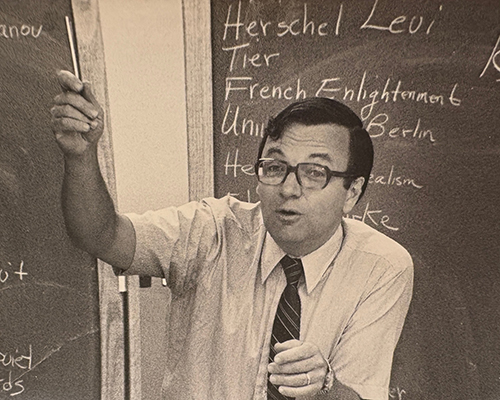
“I want you to have my personal assurance that there is nothing in this concept that will cause any deterioration in the quality of learning which takes place at Cornell. … Essentially the same courses will be offered by the same outstanding faculty with at least as good and probably better results in terms of the learning experience.”
Secor also supported more equality for women. During his decade in office, improvements were made in wage equality, the hiring of women within the administration, and women’s athletics.
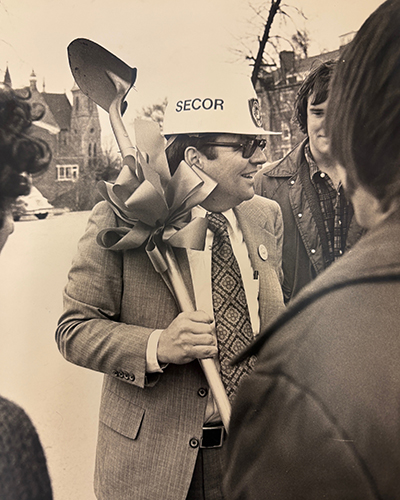
Secor was also a successful fundraiser for the college. The campaign at the time, The Cornell Advance, started just months after his arrival and produced about $15.1 million by 1981. It supported the endowment and the growth and renovation of facilities, including West Science Hall, Brackett House, College Hall, Law Hall, South Hall, and the Norton Geology Center.
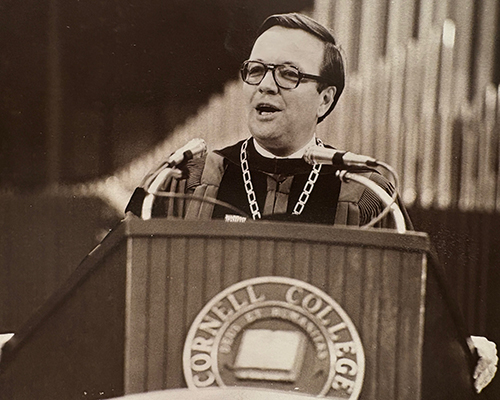
The 12th president was also known for his passion for the possibilities for Cornell, which he shared each year at the Opening Convocation. He articulated a theme and goals for the year, such as quality of life within the community, the importance of international education, and proposals for a new curriculum.
He was the husband of the late Anne Secor, to whom he was married for 63 years. Born in Mount Kisco, New York, in 1931, he was the son of Allen B. and Winifred Secor. He served in the Army Medical Corps during the Korean War after graduating from Drew University in 1953. He later earned his M.A. and Ph.D. degrees from Duke University. Secor taught political science at Duke and also at Dickinson, Davidson, and Muhlenberg colleges, specializing in Soviet politics and law. After leaving Cornell, he was the founding president of Philip Secor & Associates, a fundraising consulting firm in Allentown. He is the author of many books, including “Richard Hooker, Prophet of Anglicanism,” “Patriot John: The Man Who Saved America,” and “Presidential Profiles.”
Secor is survived by his two daughters, his son, and three grandchildren.
All photos are from the Cornell College Archives.