
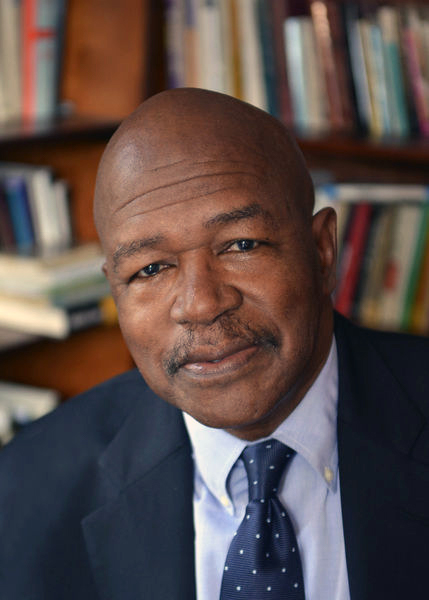
 Elijah Anderson, the Sterling professor of sociology and of Black studies at Yale University, visited Cornell on Sept. 11 as the Phi Beta Kappa (PBK) Visiting Scholar.
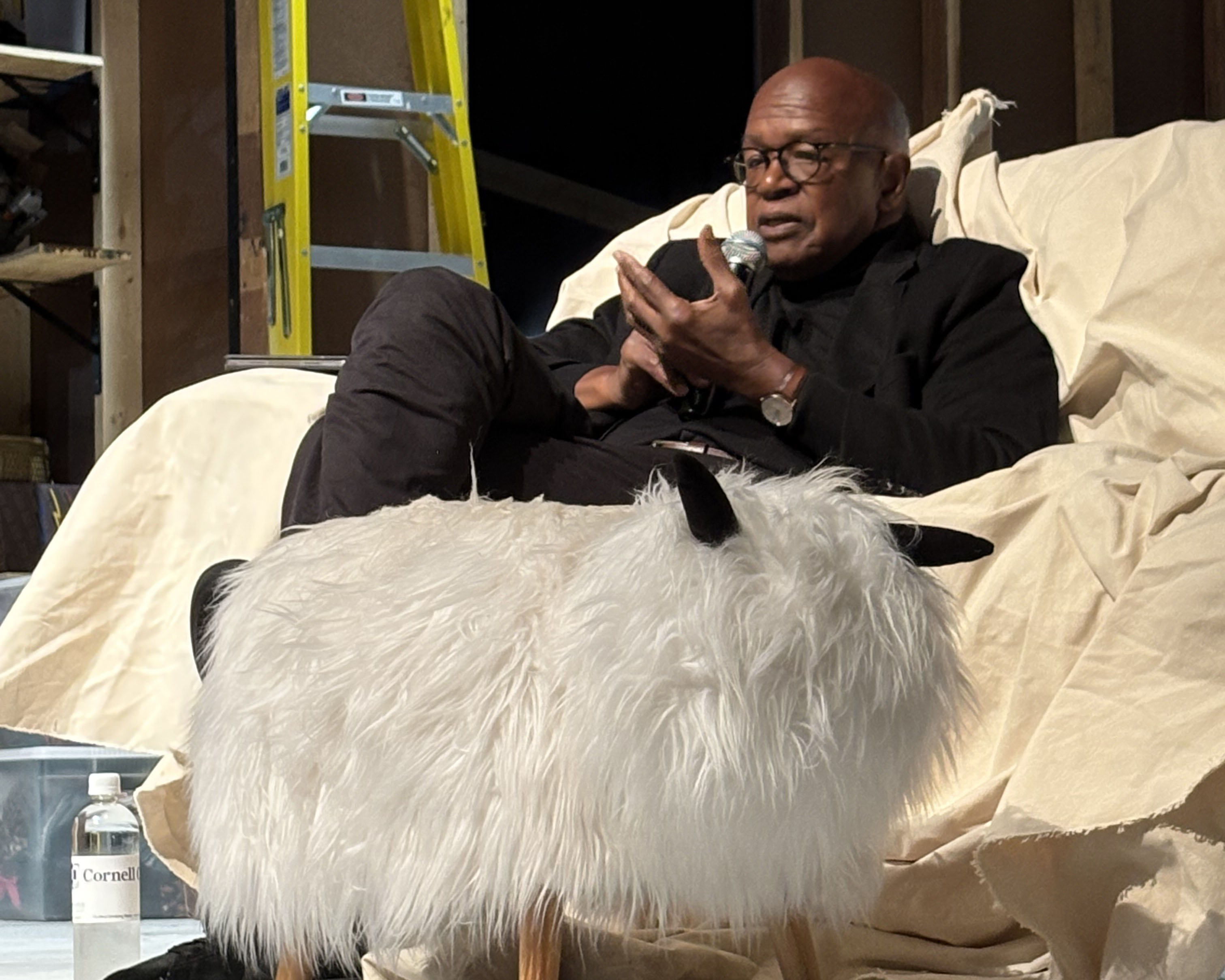
He spoke in Kimmel Theatre to address the campus on norms and deviance in society, starting with a definition of deviance from a sociological viewpoint.
"The objective approach to deviance is defined as behavior that fails to meet societies standards, values, and goals,” Anderson said. “The subjective approach is that deviance is whatever ordinary people deem amongst themselves as unacceptable in their everyday interactions. What is deviant at one point is not deviant at another point; it depends on the interaction; it depends on negotiation.”
Over the course of two hours, Anderson talked about this concept through the lens of a specific group of sociologists: ethnographers. He spoke of the need for ethnographers to explore and examine a group and its environment by becoming a part of it, rather than simply observing it from the outside.
“One of the things an ethnographer does, and this is very important, is invoke the local knowledge,” Anderson said. “It is the social structure of the community. And this is what we look at and share with the world, with a kind of understanding and analysis that helps the next person, even if they have never been to that place, to understand what these people are about. That’s what we do. That’s the challenge. And it’s hard to do.”
He is a Stockholm Prize laureate for his pioneering research in the field of criminology and one of the leading urban ethnographers and cultural theorists in the United States. His major publications are "Black in White Space: The Enduring Impact of Color in Everyday Life" (2022), "The Cosmopolitan Canopy: Race and Civility in Everyday Life" (2011), "A Place on the Corner: A Study of Black Street Corner Men" (2nd ed. 2003), "Code of the Street: Decency, Violence, and the Moral Life of the Inner City" (1999), and "Streetwise: Race, Class, and Change in an Urban Community" (1990).
Professor Anderson was also the guest for several classes and meals on Sept. 11 and 12 surrounding his lecture, including Assistant Professor of Religion Chris Hoklotubbe’s First-Year Seminar class.
“I deeply appreciated Dr. Anderson’s time with us, especially how he eloquently introduced students to the history of the field of sociology and the history of his research through compelling stories,” Hoklotubbe said.
Ava Garcia ‘28 got the chance to hear Anderson in her Second-Year Seminar class with Edwin R. and Mary E. Mason Professor of Languages John Gruber-Miller, Contesting Citizenship.
“Listening to him, reading his stories, and getting to know him really gave insight into how much unity there is between individuals, and although our differences are what make the world, it is also a tool to divide people,” Garcia said. “I am so grateful for having the chance to listen to him and his story. We had the opportunity to listen and witness something outside of ourselves. Something greater. It’s how we make a larger change and become better human beings.
The Visiting Scholar program is an annual speaker series curated by the Phi Beta Kappa Society, which identifies speakers and supports PBK chapters eager to hear them speak. Professor of Politics David Yamanishi says it’s a great opportunity for the campus community.
“I love the Visiting Scholar program. We’ve had five or six guests here during my time at the college, and all have been well-selected by PBK as interesting and important speakers,” Yamanishi said. “The Visiting Scholar program is an important part of bringing major scholars to chapters at smaller campuses.”
The visit was co-sponsored by the Provost's Office and funded primarily by the Phi Beta Kappa Visiting Scholar program. Phi Beta Kappa is the nation's oldest and most prestigious undergraduate honors society. Cornell College's chapter, one of about three hundred across the country, is over a century old.