Cornell College was the beginning of many of life’s great adventures for Scott Provinse ’93.
The Austin, Texas, native now calls Washington, D.C., home where he’s settled down with his two young daughters, Julia Rose (10) and Serena (8), and wife, Hilary.Thinking back, it’s hard for Provinse to recall all of the jobs he held after graduation, but he smiles thinking of each one and treasures the experiences he’s had knowing he’s tried a lot of everything.“I think a lot of that comes from Cornell,” he said. “I think being fearless about something new and being curious and wanting to see if there’s a way I can contribute in some meaningful way or learn about it or support those who are adding value–I think that comes directly from Cornell.” After working as a bank tower security guard and a researcher for the Austin Business Journal, Scott moved to Chicago where he briefly lived out of his car and became a family foster care caseworker. Then, he worked in the clinical social work program at a school for students with behavioral disorders.“Doing the social work, being deeply rooted in these communities, you could see that you can have an impact,” Provinse said. “But the impact was micro and I wanted to have a larger, broader impact. I thought public interest law was a way to potentially do that.”He went to law school and became a lawyer, after several years he decided to become a professional sailor. He sailed around the world and even become a sailing coordinator on a popular movie featuring Sarah Jessica Parker and Matthew McConaughey, “Failure to Launch.”
“Whenever there was a boat somewhere in the movie, I was somewhere on that boat,” he said. “I would lie on the cockpit sole whispering up to Sarah Jessica Parker about how to steer the boat while the camera is running alongside so no one could see me.”After meeting his wife, the two settled in D.C., and Provinse started working in the renewable resource sector, which helped him transition into the business world. He currently works part-time as the chief business officer at Hypatia, a company that uses big data to solve big problems, and he is a principal at VMG Energy Group, an advisory firm he founded that provides finance and development support for clients in the renewable energy industry.He’s also enjoying some much-needed downtime teaching meditation to incarcerated populations and spending as much time as possible with his daughters as they go through school. With children, he thinks about the future and knows how important the liberal arts will be.“In an era where we are inundated with information, being able to discern value from the mass amounts of media that comes at us is very important,” he said. “Being able to have confidence that you can enter into an environment and find ways to contribute and add value–that’s liberal arts in my mind. That’s the open-mindedness, the ability to learn and see new things and not be so fixed in your mindset–that is what we are going to need for the future.”His advice for new and future Cornell students is to follow their interests and if those interests wander that’s okay.“Life should be kind of a renaissance mentality where you get to explore and enjoy, and participate in things without having to commit your entire being to it. I felt like Cornell was like that,” he said.

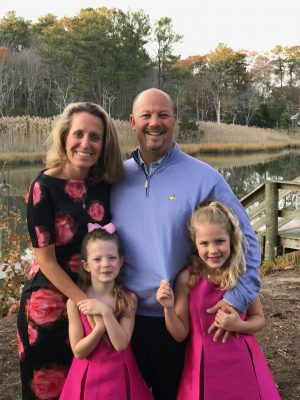 The Austin, Texas, native now calls Washington, D.C., home where he’s settled down with his two young daughters, Julia Rose (10) and Serena (8), and wife, Hilary.
Thinking back, it’s hard for Provinse to recall all of the jobs he held after graduation, but he smiles thinking of each one and treasures the experiences he’s had knowing he’s tried a lot of everything.
“I think a lot of that comes from Cornell,” he said. “I think being fearless about something new and being curious and wanting to see if there’s a way I can contribute in some meaningful way or learn about it or support those who are adding value–I think that comes directly from Cornell.”
After working as a bank tower security guard and a researcher for the Austin Business Journal, Scott moved to Chicago where he briefly lived out of his car and became a family foster care caseworker. Then, he worked in the clinical social work program at a school for students with behavioral disorders.
“Doing the social work, being deeply rooted in these communities, you could see that you can have an impact,” Provinse said. “But the impact was micro and I wanted to have a larger, broader impact. I thought public interest law was a way to potentially do that.”
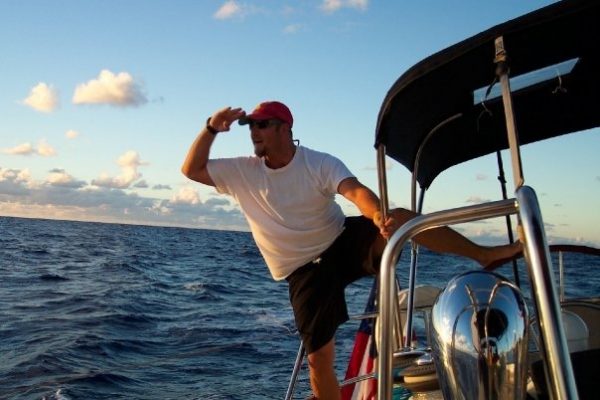
He went to law school and became a lawyer, after several years he decided to become a professional sailor. He sailed around the world and even become a sailing coordinator on a popular movie featuring Sarah Jessica Parker and Matthew McConaughey, “Failure to Launch.”
The Austin, Texas, native now calls Washington, D.C., home where he’s settled down with his two young daughters, Julia Rose (10) and Serena (8), and wife, Hilary.
Thinking back, it’s hard for Provinse to recall all of the jobs he held after graduation, but he smiles thinking of each one and treasures the experiences he’s had knowing he’s tried a lot of everything.
“I think a lot of that comes from Cornell,” he said. “I think being fearless about something new and being curious and wanting to see if there’s a way I can contribute in some meaningful way or learn about it or support those who are adding value–I think that comes directly from Cornell.”
After working as a bank tower security guard and a researcher for the Austin Business Journal, Scott moved to Chicago where he briefly lived out of his car and became a family foster care caseworker. Then, he worked in the clinical social work program at a school for students with behavioral disorders.
“Doing the social work, being deeply rooted in these communities, you could see that you can have an impact,” Provinse said. “But the impact was micro and I wanted to have a larger, broader impact. I thought public interest law was a way to potentially do that.”
He went to law school and became a lawyer, after several years he decided to become a professional sailor. He sailed around the world and even become a sailing coordinator on a popular movie featuring Sarah Jessica Parker and Matthew McConaughey, “Failure to Launch.”
 He’s also enjoying some much-needed downtime teaching meditation to incarcerated populations and spending as much time as possible with his daughters as they go through school. With children, he thinks about the future and knows how important the liberal arts will be.
“In an era where we are inundated with information, being able to discern value from the mass amounts of media that comes at us is very important,” he said. “Being able to have confidence that you can enter into an environment and find ways to contribute and add value–that’s liberal arts in my mind. That’s the open-mindedness, the ability to learn and see new things and not be so fixed in your mindset–that is what we are going to need for the future.”
His advice for new and future Cornell students is to follow their interests and if those interests wander that’s okay.
“Life should be kind of a renaissance mentality where you get to explore and enjoy, and participate in things without having to commit your entire being to it. I felt like Cornell was like that,” he said.
He’s also enjoying some much-needed downtime teaching meditation to incarcerated populations and spending as much time as possible with his daughters as they go through school. With children, he thinks about the future and knows how important the liberal arts will be.
“In an era where we are inundated with information, being able to discern value from the mass amounts of media that comes at us is very important,” he said. “Being able to have confidence that you can enter into an environment and find ways to contribute and add value–that’s liberal arts in my mind. That’s the open-mindedness, the ability to learn and see new things and not be so fixed in your mindset–that is what we are going to need for the future.”
His advice for new and future Cornell students is to follow their interests and if those interests wander that’s okay.
“Life should be kind of a renaissance mentality where you get to explore and enjoy, and participate in things without having to commit your entire being to it. I felt like Cornell was like that,” he said.