Bon Appétit serves local food with Farm to Fork program
September 19, 2017
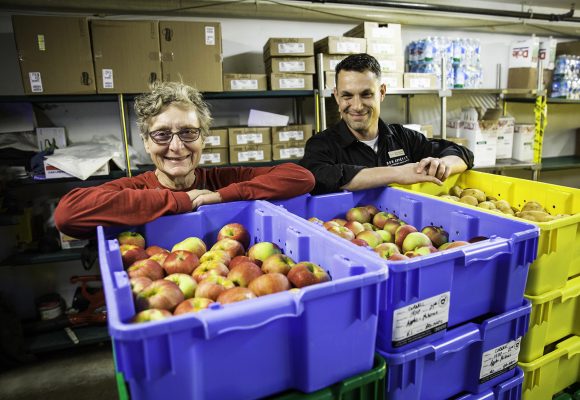
On a typical day behind the Thomas Commons on the Cornell College campus, you’ll see several vehicles driving up to the loading dock to unload food for Bon Appétit to use in its meal service.Mary Zahradnik of Buffalo Ridge Orchard delivers apples to Bon Appétit General Manager James RichardsMany of the vehicles, however, aren’t large semis—they’re minivans or smaller trucks marked with the names of local farms. “Today, we’re delivering potatoes and apples,” said co-owner of Buffalo Ridge Orchard Marcus Johnson.The orchard is just a 30-minute drive from Cornell College, and the team at Buffalo Ridge has been working with Bon Appétit for about three years, providing apples, potatoes, cucumbers, and cherry tomatoes.“They are not just buying the produce because they have to, but they are buying it because they are really interested in it also,” Johnson said. “For us, it’s beneficial because this partnership supplements what we sell at farmers markets. We are dropping off items that are pre-sold.”Twenty percent of Cornell’s food comes from eastern Iowa growers. In fact, this fiscal year Bon Appétit will pay local farmers $350,000 for farm-fresh ingredients. Since Bon Appétit arrived on campus during the summer of 2012, it has invested nearly $1 million in the community.“When Bon Appétit comes calling, it’s a big deal to local farmers,” said Bon Appétit General Manager James Richards. “We have such a demand for local produce that local farmers are expanding their fields and growing their income.”It’s called the Farm To Fork program. All of the produce that qualifies for this program comes from within 150 miles and meat within 500 miles. “We hold very high standards for the quality of our locally grown food,” said Bon Appétit General Manager James Richards. “Our Executive Chef David Smigo personally visits the local farms to check out the crop.”Farm to Fork guidelines include:
Farms, orchards, and mills providing items such as produce, coffee, and dairy must be located within 150 miles
The farm must be owner-operated or a co-op of owner-operators
The farm must not sell more than $5 million annually
Milk/yogurt must come from cows not treated with artificial Bovine Growth Hormone
Chicken/turkey has been produced without the routine use of antibiotics in feed or water as a growth promoter or disease preventer
Eggs are produced cage-free
Pork comes from hog farms that don’t confine sows to gestation crates for their entire pregnancies