Gingerly, Britton Walker Zuccarelli ’07 gripped the retractors that hold skin flaps out of the way of the surgeon performing a total knee replacement.
“In the stagnant air and 85-degree temperature of the operating room, I found myself sweating through my scrubs and struggling not to use my sterile, gloved hands to wipe my brow,” she said. “I was stunned to have even been allowed into the operating room.”
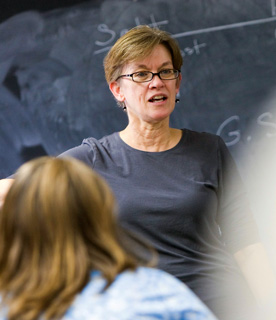
The students' enthusiasm generates excitement in Barbara Christie-Pope, Dimensions faculty director and professor of biology.
It was April of 2006 in Managua, Nicaragua. She was a Cornell College junior.
“Getting to scrub in to observe orthopedic surgery doesn’t normally happen until your third year of medical school,” said Zuccarelli, now a second-year, full-scholarship medical student at the University of Kansas in Lawrence.
Getting up close with surgery is one of the more dramatic opportunities provided by an innovative, four-year- old Cornell academic program called Dimensions: The Center for the Science and Culture of Healthcare.
Conceived collaboratively and funded by Dr. Lawrence “Larry” Dorr ’63, Dimensions is not simply about good science education. It’s about students learning the “care” of health care.
“In my field I could see the dominance of the science of medicine and the diminution of the art of medicine,” said Dorr, a world leader in hip and joint replacement surgery and research and a Cornell College trustee. Having superior medical skills is not enough, he added.
“Compassion in medicine is the most important characteristic a doctor can have. People respond better when you treat them better.”
As Cornell leaders and faculty became excited about using the liberal arts to bolster science education, the program launched with the understanding that students interested in health care would learn not just traditional subjects such as biology and chemistry, but empathy, communication, creativity, and teamwork. Students would learn “the science and culture” of health care.
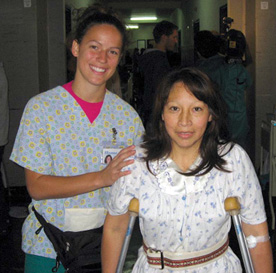
"Dimensions changed my life, when I came to Cornell, I wasn't considering the health care field. I was thinking of education or economics. But it never felt right. I'd say it, but never quite believe it. Now when I say I want to go to medical school and become a physician, I believe it." --Senior Amanda Jepson, seen here during a visit with a patient's family during Operation Walk in Peru.
But Dimensions is so much more than just course work. Students discuss health care topics in a reading group, listen to guest speakers, receive medical school admissions test training, attend workshops and seminars, and apply for a wide range of on- and off-campus research projects and internships. In 2008 Dimensions funded summer research for 20 students, investing $50,000 in faculty-student research on campus and an additional $15,000 for students doing research off-campus. Dimensions also financially supports five to 10 students a year who travel to professional conferences with their faculty mentors.
To aid the 75 to 80 students a year who arrive at Cornell with a goal of entering a health science field (encompassing pharmacy, dentistry, research, physical therapy, and veterinary medicine, among others), Cornell provides individual guidance and support. Program coordinator Bobbi Buckner Bentz ’01, serves as part den mother, part cheerleader, and part border collie, rounding up her charges to find the opportunities that best fit their goals.
“In my mind, Bobbi is the Dimensions program,” said senior See-yin So. “She’s always a go-to person.”
Barbara Christie-Pope, Dimensions faculty director and professor of biology, agrees. “Bobbi ferrets out these students,” Christie-Pope said. “It’s pretty hard for a student to get lost. She’s there with a constant reminder. She knows every one of these students who wants to go into a health care field, and she’s pretty hard to avoid.”
Under Bentz and Christie-Pope’s direction, the program immediately reached out to other disciplines.
“Faculty outside of the sciences can use Dimensions as a resource,” Christie-Pope said. For example, the program paid for a field trip to St. Louis to see “Body Worlds,” an exhibit of human bodies, as part of two courses—one an advanced sociology course titled Sociology of the Body, and the other an advanced anatomy and physiology course.
Dimensions Reading Group books
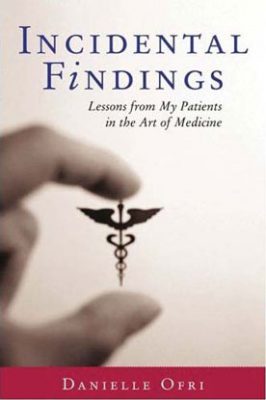
The Spirit Catches You and You Fall Down: a Hmong Child, Her American Doctors, and the Collision of Two Cultures by Anne Fadiman (Noonday Press, 1998) Stiff: The Curious Lives of Human Cadavers by Mary Roach (W.W. Norton, 2003) The Great Influenza: The Epic Story of the Deadliest Plague in History by John Barry (Viking, 2004) Complications: A Surgeon’s Notes on an Imperfect Science by Atul Gawande (Metropolitan Books, 2002) Adam’s Curse: The Science that Reveals Our Genetic Destiny by Bryan Sykes (W.W. Norton, 2005) The Diving Bell and the Butterfly by Jean-Dominique Bauby (Knopf, 1997) The God Gene: How Faith is Hardwired into Our Genes by Dean Hamer (Doubleday, 2004) On Doctoring: Stories, Poems, Essays edited by Richard Reynolds and John Stone (Simon & Schuster, 1991) My Own Country: A Doctor’s Story of a Town and its People in the Age of AIDS by Abraham Verghese (Simon & Schuster, 1994) How Doctors Think by Jerome Groopman (Houghton Mifflin, 2007) This Man’s Pill: Reflections on the 50th Birthday of the Pill by Carl Djerassi (Oxford University Press, 2001) The Doctor Stories by William Carlos Williams (New Directions, 1984) Incidental Findings: Lessons from My Patients in the Art of Medicine by Danielle Ofri (Beacon Press, 2005) The Best of the Bellevue Literary Review edited by Danielle Ofri (Bellevue Literary Press, 2008)
“My students saw it as a depiction of anatomy,” Christie- Pope said. “But the sociology students saw it as making a comment about the human body, wondering why a body was posed in a certain way. There was a wonderful discussion on the bus driving home.”
Two Dimensions-funded courses—Medical Anthropology and Comparative Healthcare Systems—have already become part of the curriculum.
“Dimensions changed my life,” said Amanda Jepson, a senior from Wayland, Iowa. “When I came to Cornell, I wasn’t considering the health care field. I was thinking of education or economics. But it never felt right. I’d say it, but never quite believe it. Now when I say I want to go to medical school and become a physician, I believe it.”
The multi-faceted approach of the program allows for a personalized student experience.
“Dimensions drew me to Cornell,” So said. “I was interested in forensic pathology, and the other colleges didn’t know what to do with me. When I talked to Cornell College, they sent me straight to Bobbi.”
Bentz worked with Jason Kolowski ’98 of the New York City Medical Examiner’s Office on So’s internship there last summer. “I was actually working on molecular genetics, dealing with SIDS (Sudden Infant Death Syndrome) and specific mutations of genes, and forensic cell pathology,” So said. “I went into the morgue and got to see autopsies.”
The internship solidified So’s career goals. “I had wondered whether this was really what I wanted to do, but I saw how everything worked together: the lab, the criminologists, the detectives in court. It’s real!” So said. “I love the real world. I know I wouldn’t have had this input anywhere else.”
Bentz helped place junior Adam Norton in the Cornell Fellows Program to conduct research at Gunderson Lutheran Medical Center in La Crosse, Wis. His work, combing medical records to measure end-of-life health care directives, is part of a research paper submitted for publication. “I’m not sure if research is really my area, but the things I learned about ethics and humanities really changed me as a person,” Norton said.
In reviewing death records, Norton realized how physicians can develop a relationship with a dying patient to honor their wishes. “We’re not just treating the disease—we’re treating the patient,” he said.
Five students have had compelling internship opportunities with Dr. Richard Kraig ’71, director of the University of Chicago Medical Center’s Cerebrovascular Disease and Aging Laboratories. One former intern impressed Kraig so much he hired her to work in his lab. Kraig also realized that with One-Course-At-A-Time, he could even coteach a course in neurobiology with Christie-Pope, driving to Mount Vernon to teach every Monday for one block last year.
Dimensions, he said, begins the process to building a true health care professional. “You can’t be taught compassion, but you can be shown how others do it and emulate it as your personality fits it,” he said. “You teach with the Socratic approach: how to listen, talk, and how to interrelate with a vocabulary consistent with the environment.”
That environment, for 14 carefully selected students since 2005, has included medical mission trips to El Salvador, China, Nicaragua, Peru, Vietnam, and Guatemala as part of Operation Walk. This nonprofit medical mission started by Dorr provides free joint replacement surgery for patients in developing countries and the United States.
Operation Walk was an overwhelming experience for Zuccarelli, who spent 10 hours in an operating room in Nicaragua and learned how to read X-rays and prep a patient for surgery and post-operation care. Beyond the excitement of the OR, though, Zuccarelli’s experience was heightened by being bilingual.
“The practice of medicine requires a thorough understanding of the sciences, but in order to be a successful physician, who is able to fully address the biopsychosocial as well as the physical needs of each patient, other life skills are necessary,” she said. “On Operation Walk, I learned how valuable my ability to communicate with Spanish-speaking patients will be. And my ability to speak Spanish enabled me to communicate with everyone, which taught me that medicine is all about teamwork.”
Kent Lehr ’06 said the highlight of his Operation Walk trip to El Salvador in 2005 was delivering soccer balls to children at an elementary school. “Operation Walk is unique because it becomes part of a culture, and its volunteers expand beyond the walls of a hospital. Operation Walk is the epitome of what Dimensions is all about: the science, culture, art and compassion of health care,” said Lehr, a Cornell young trustee and second-year M.B.A./M.H.A. (master of health administration) candidate at the University of Iowa Tippie School of Management.
On an Operation Walk trip to Lima, Peru, last October, Jepson, who was thinking of going into physical therapy, instead discovered a passion for the operating room. “The trip gave me a lot of confidence I didn’t have before,” said Jepson, who observed surgeries, talked with physicians, and saw the end results during a visit with a patient’s family. “The family was so happy, and I realized that even though we were helping one patient, we were affecting an entire family.”
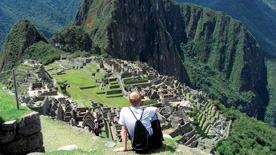
It was also Jepson’s first trip outside the county, and she and fellow Operation Walk intern Nate Olafsen ’08—who majored in anthropology and biochemistry and molecular biology and is now a medical student at the University of Missouri—traveled to Machu Picchu. It gave Olafsen a chance to use his Spanish skills, and both of them the opportunity to immerse themselves in the culture.
Nate Olafsen '08 immersed himself in Peru's culture, visiting Macu Picchu as an anthropologist and using his Spanish skills, during an Operation Walk trip to Peru.
“Being there, seeing the mountains, and talking to people really brought history alive,” Olafsen said. “Through Operation Walk I was able to participate in a culture vastly different from my own. I saw history, daily living, and in particular, the culture in a medical setting. It was the perfect trip to tie together all my interests—a love for science and a fascination for people and how they work culturally and socially.”
Students like Olafsen who entered Cornell in the past four years are part of the first generation completely embraced by Dimensions. While full measurements of the program’s success are still a few years away, early reads show positive improvements.
“We’ve seen our MCAT (Medical School Admissions Test) scores rising,” said Bentz. “We’ve also noticed many more students are getting interviews with professional schools in a variety of health-related fields. We see this as a direct result of the experiences we are providing students via Dimensions while they are at Cornell, and of our health professions committee that works with students during the application process.”
The students’ enthusiasm also generates excitement in their professors.
“I’ve seen so many lights go on,” said Christie-Pope. “You can take a liberal arts degree from Cornell College and get to the pinnacle of your field.”
Jepson, who will take a year off next year to prepare for medical school admissions, knows the value of what she’s been given. “I would like to meet Dr. Dorr. I’d really like to thank him,” Jepson said. “I’m impressed because he puts his money in Cornell, his undergraduate institution. He’s kicking it back to people who really need it.”
And she plans to pay it forward. “There’s no way you can take from a program like this and not want to give back.”
Norton, who is thinking about pursing pediatric hematology/oncology, agrees. “I hope I can achieve the dreams I’ve set for myself, and someday fund a program through Dimensions,” he said.
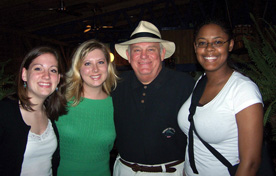
Dr. Larry Dorr '63 during Operation Walk in 2006 in Nicaragua with (from left) Britton Walker Zuccarelli '07, Bobbi Buckner Bentz '01, and Amber James '07.